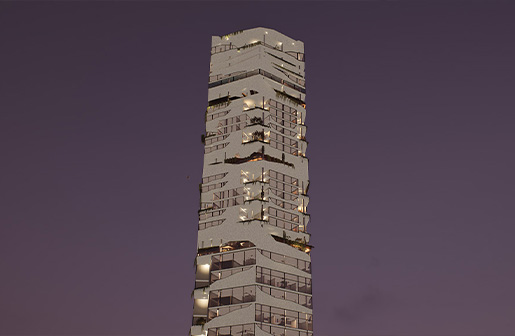
Runway to Reverie
Envisioned as Lahore’s first integrated fashion hub, a bold experiment in uniting fashion and architecture to create an environment where learning, creativity, and professional practice coexist.
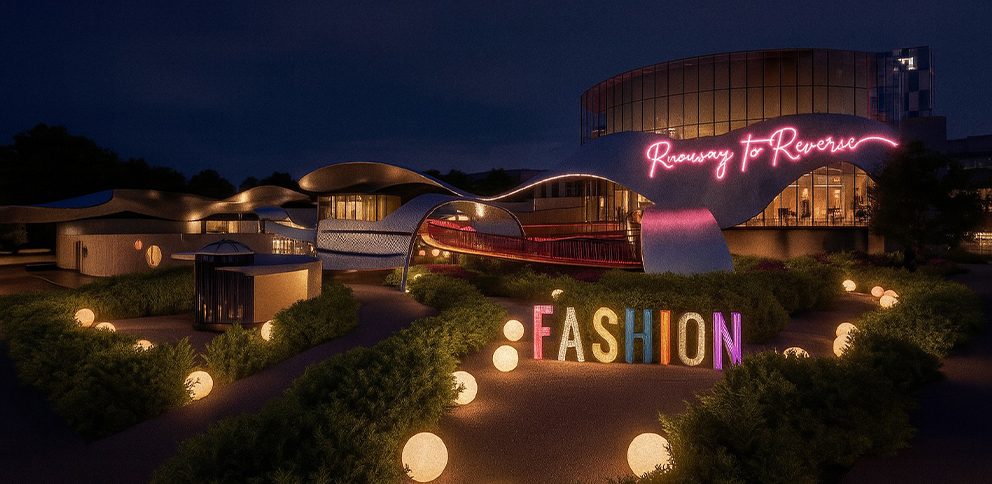
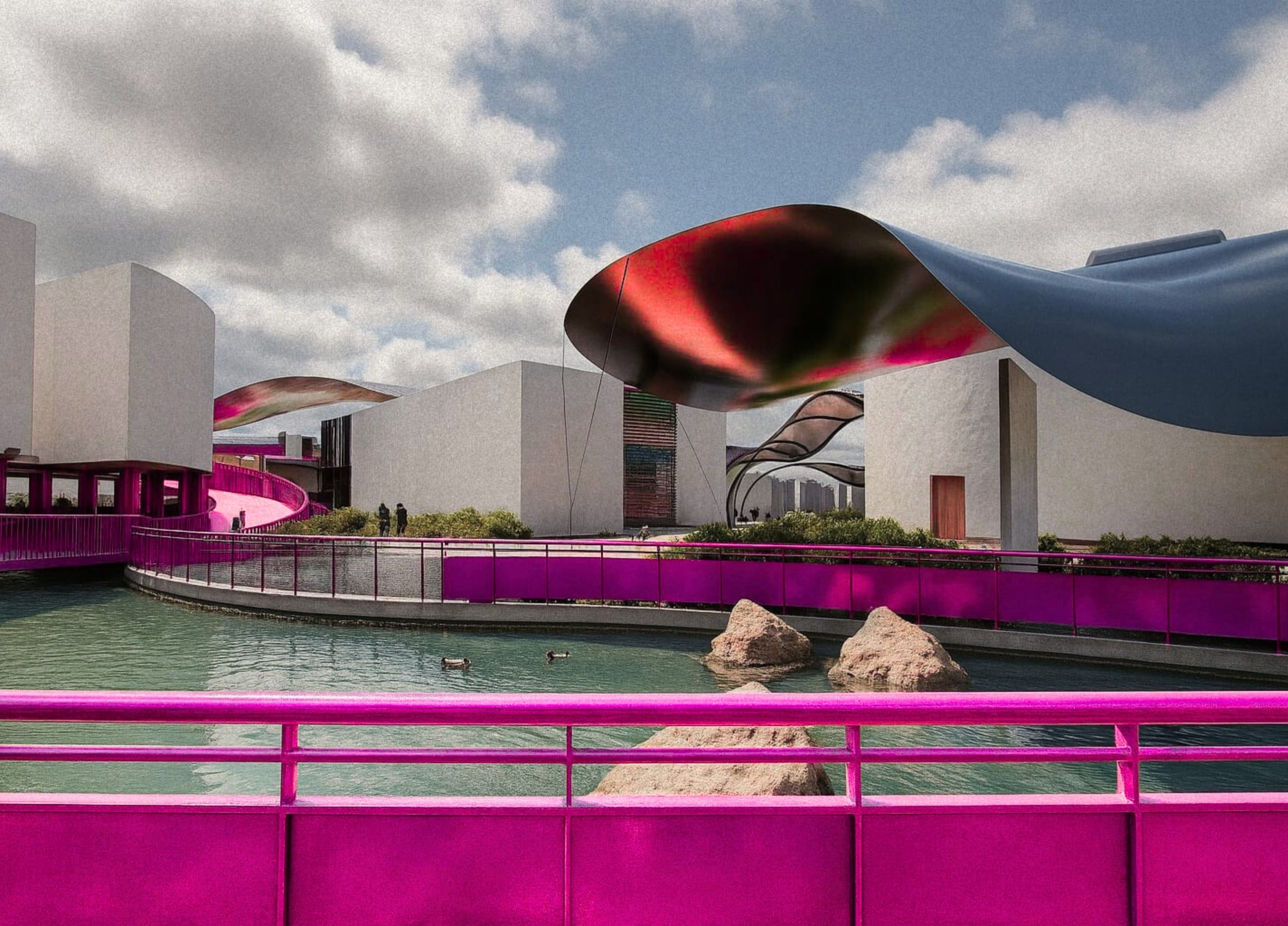
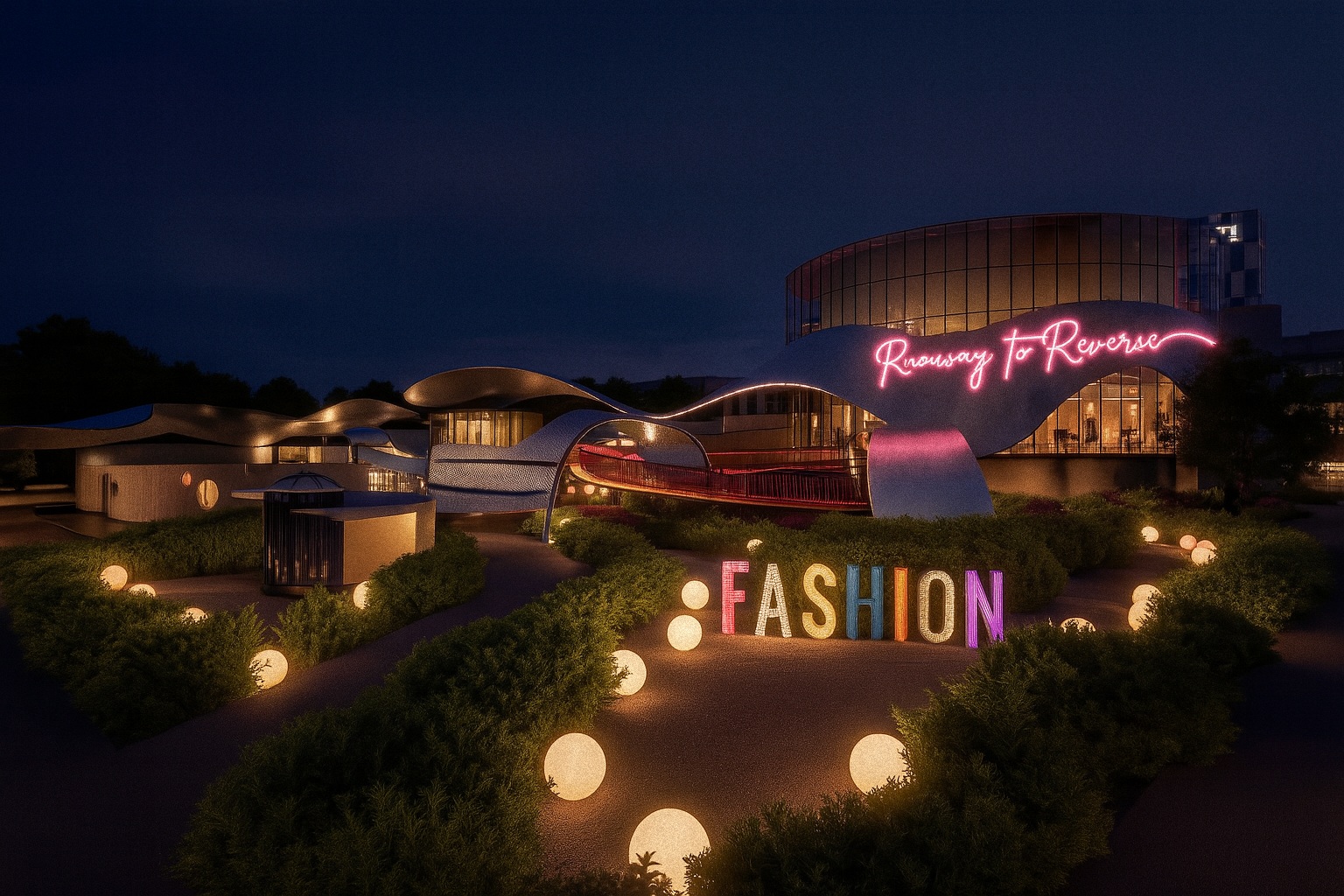
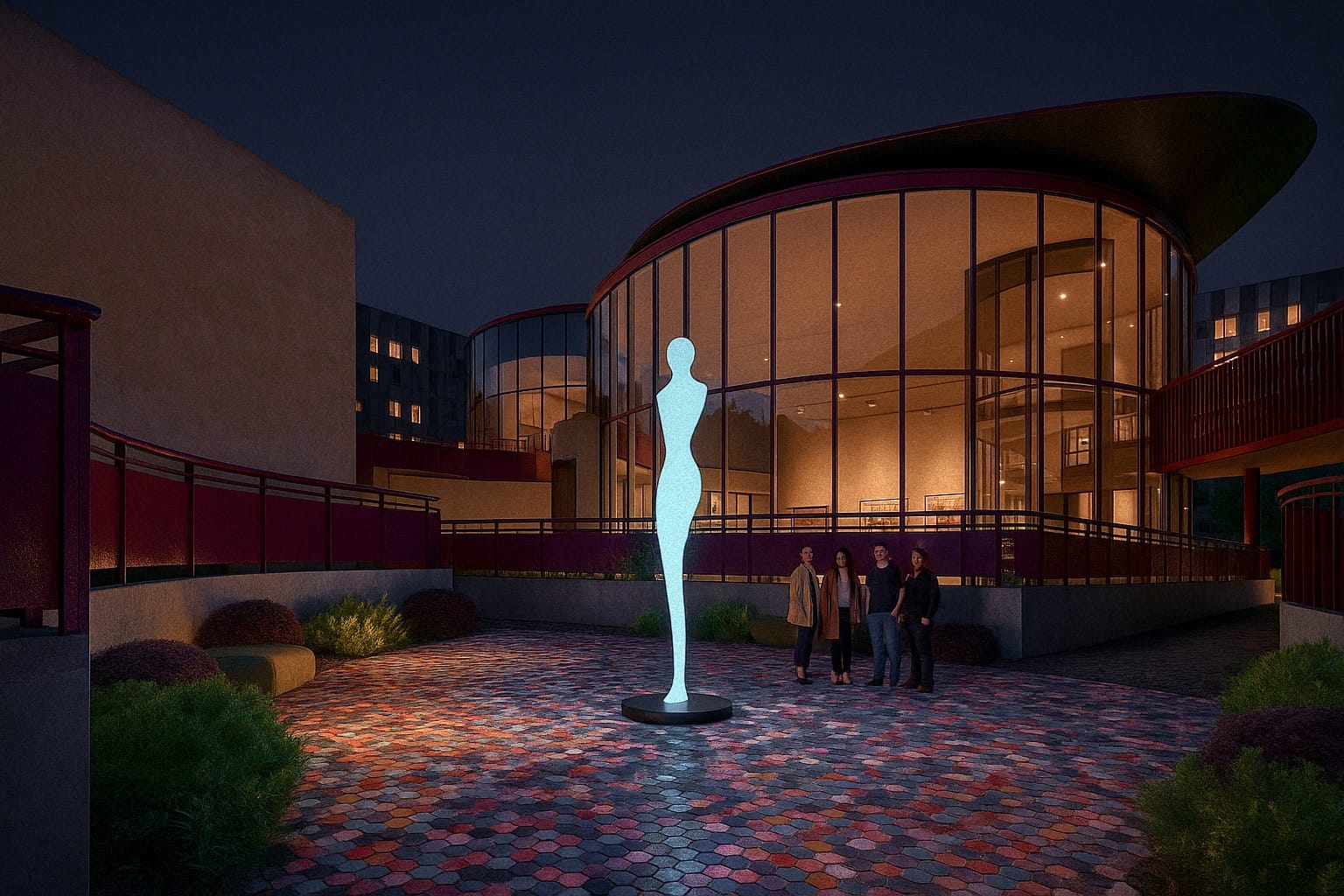
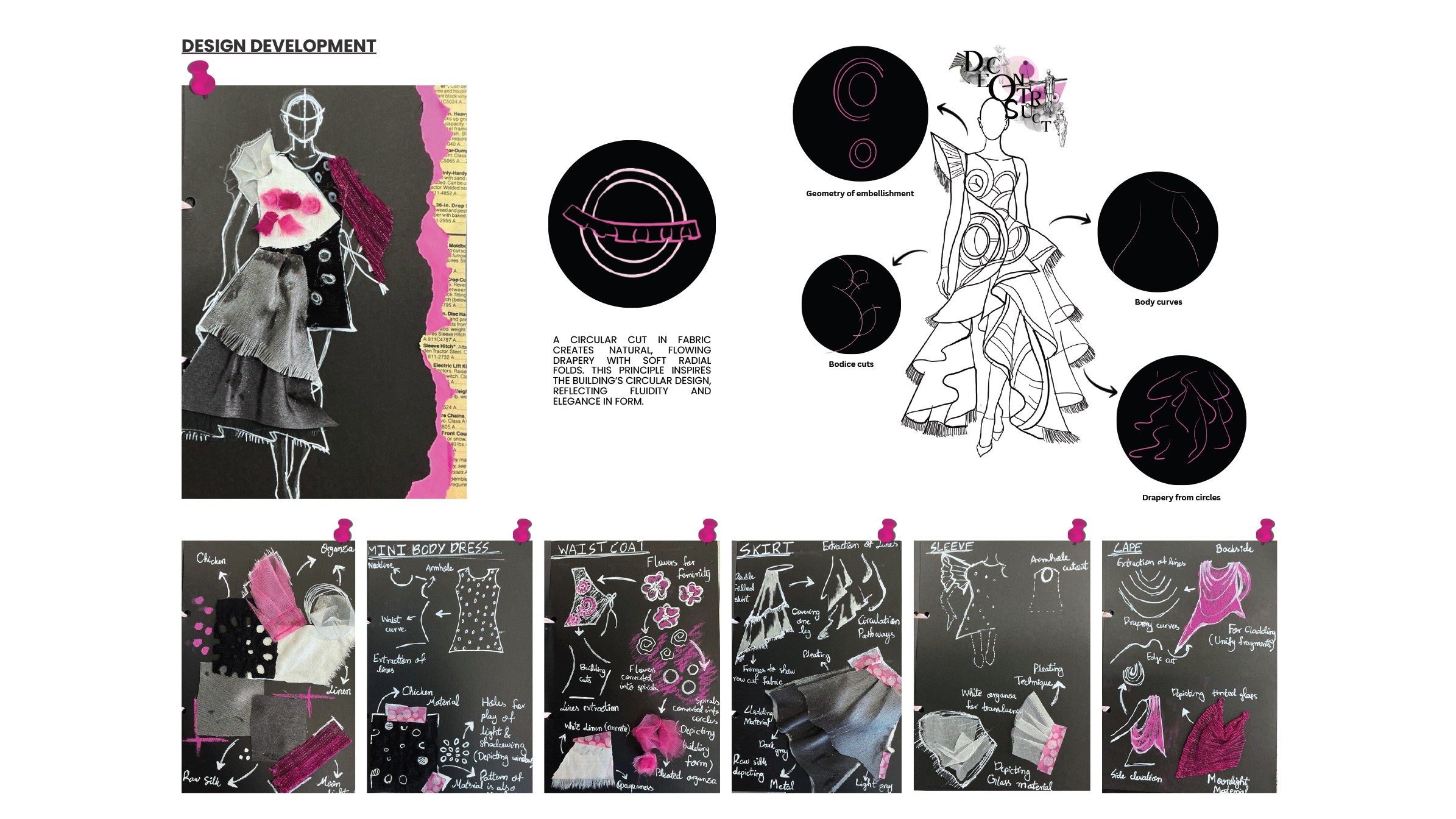
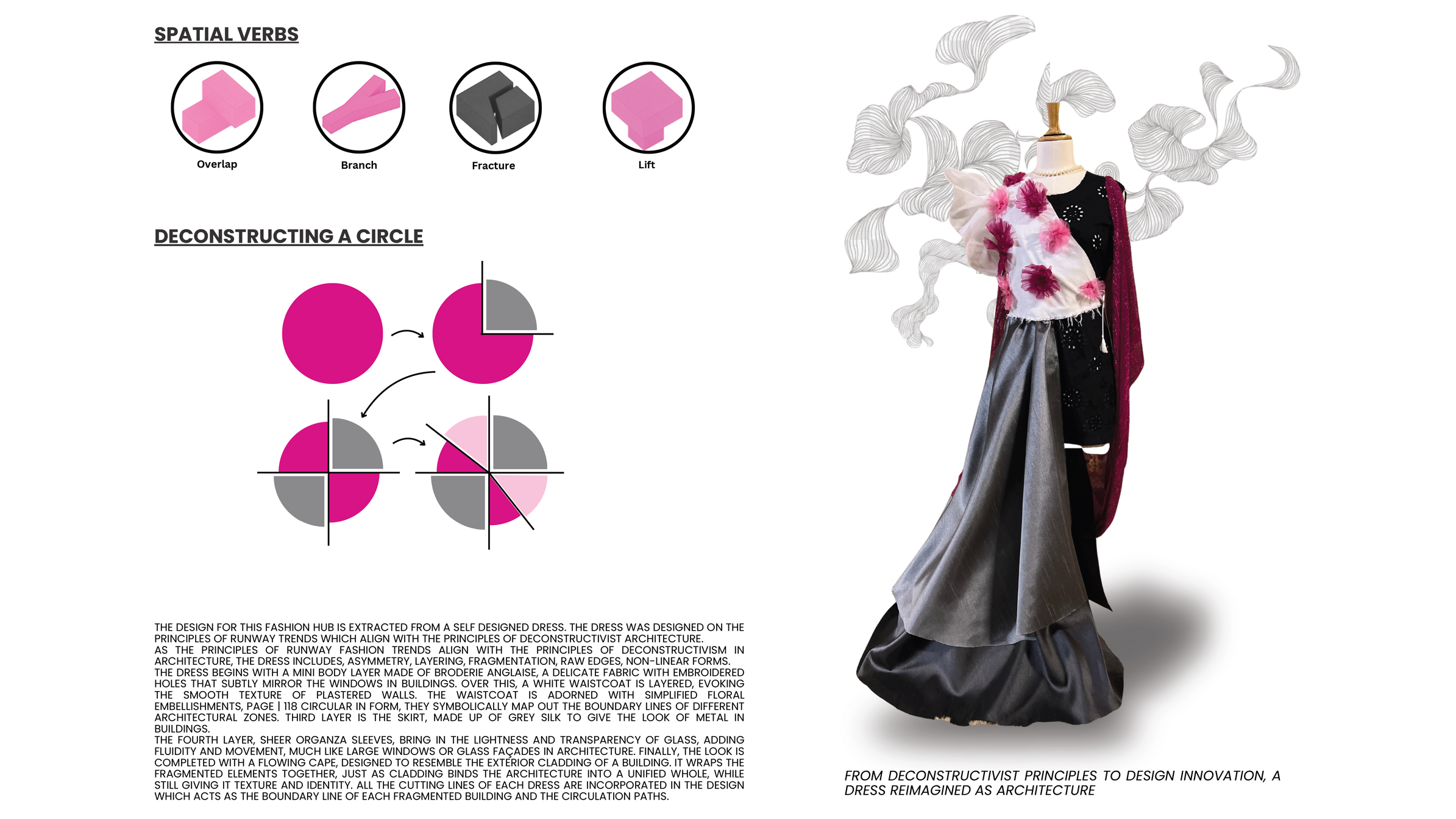
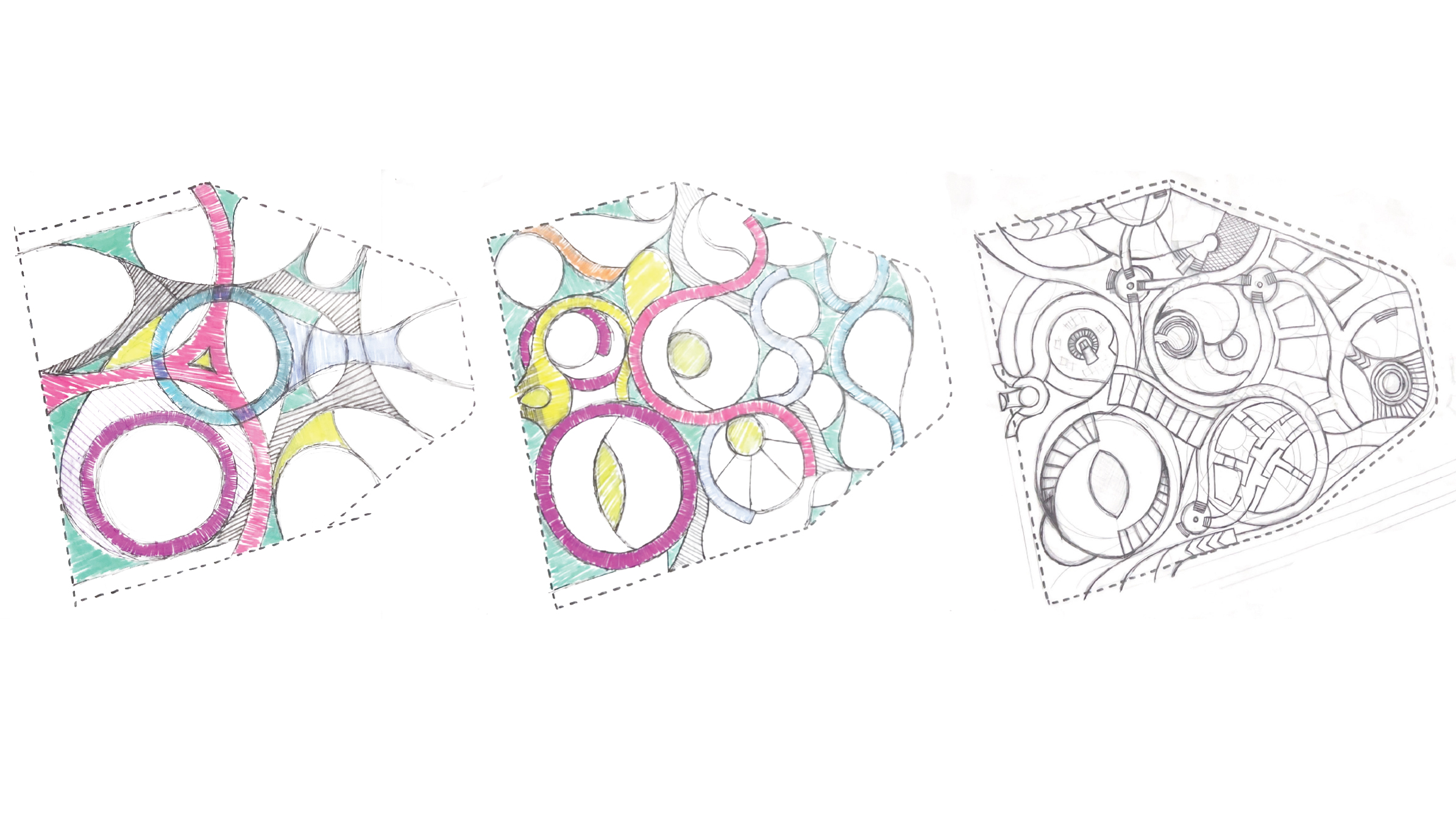
Runway to Reverie is envisioned as Lahore’s first integrated fashion hub, an ambitious experiment uniting fashion and architecture to create a space where creativity, learning, and professional practice converge. The project is guided by three ideologies: fashion and architecture, deconstructivism, and sustainability. The design began with the question: What if architecture could embody the language of fashion? To explore this, parallels between fashion trends and architectural forms were studied. Deconstructivist principles—fragmentation, layering, and asymmetry—found on runways naturally aligned with architectural exploration, providing a foundation for spatial experimentation. A self-designed dress served as the prototype, its fabrics and details translated into architectural expression. Transparent organza became glass walls, metallic silk into cladding, broderie anglaise into punctured facades, while a flowing cape evolved into a unifying exterior skin. The garment’s cutting lines shaped circulation and fragmented volumes, transforming fashion’s language into spatial geometry. The result is a built form that blurs the boundaries between fashion and architecture while foregrounding sustainability and innovation.
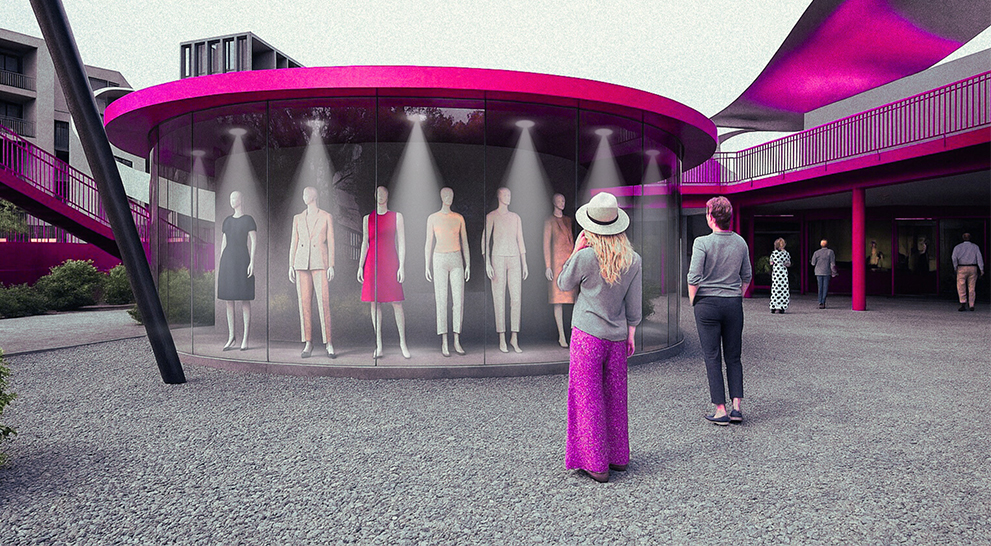
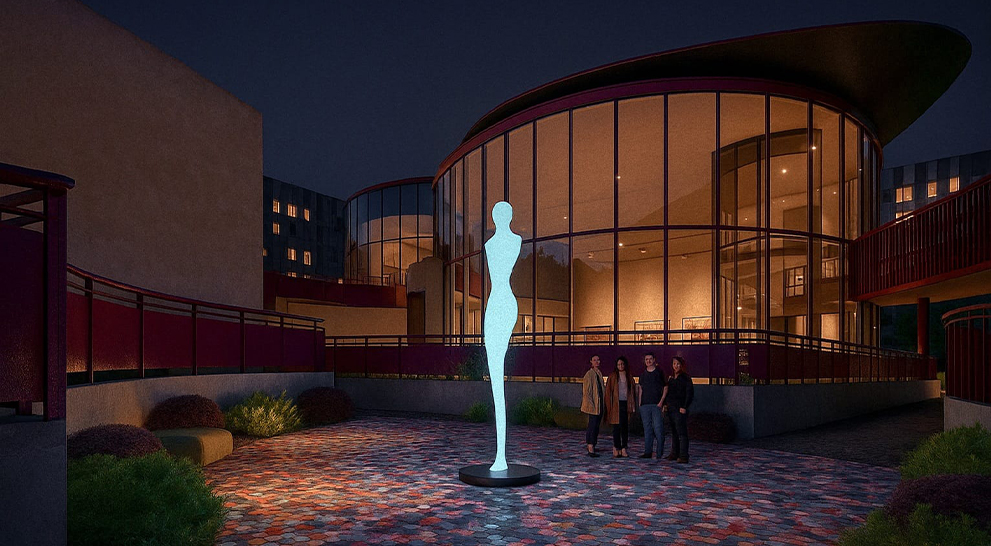
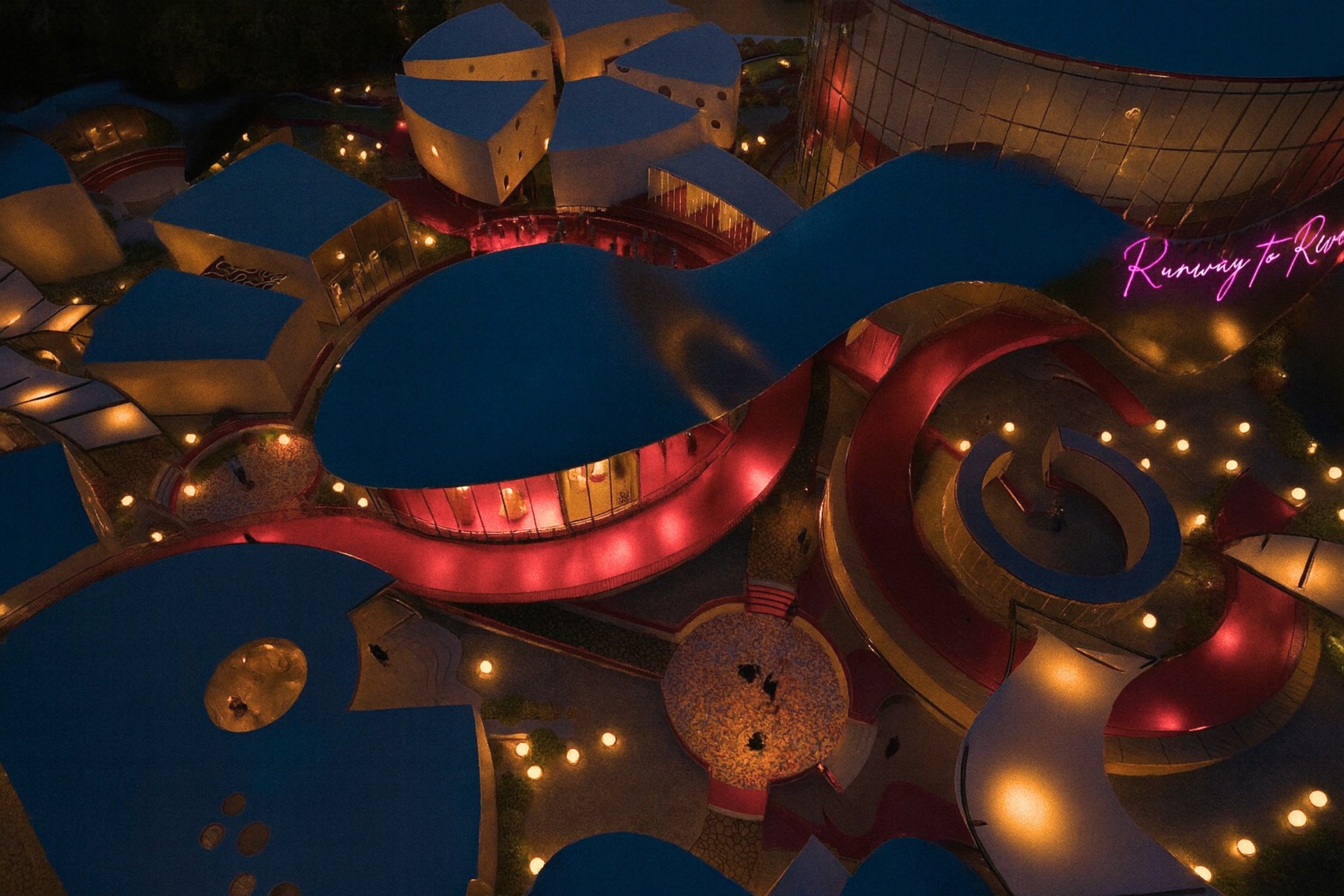
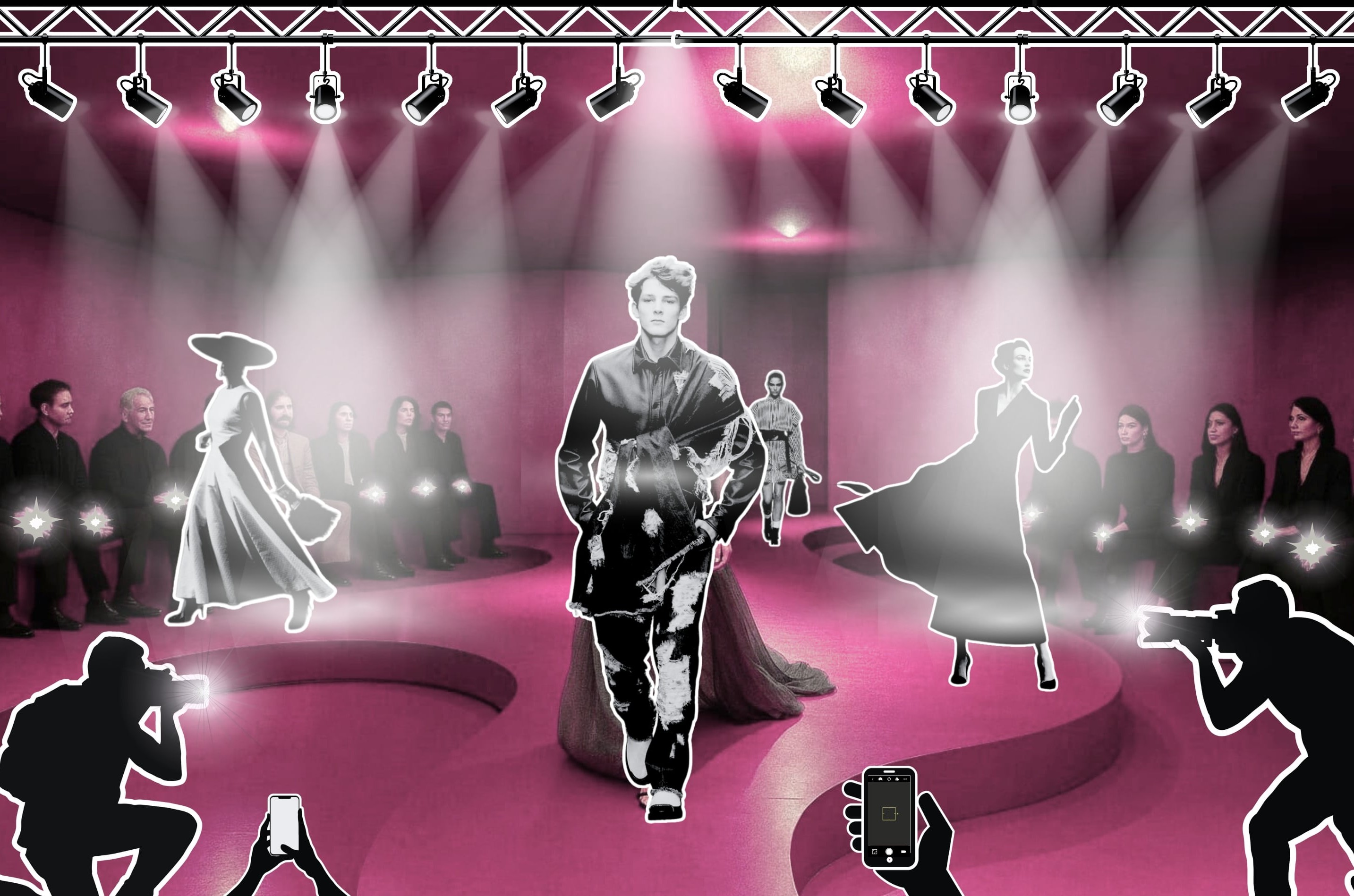
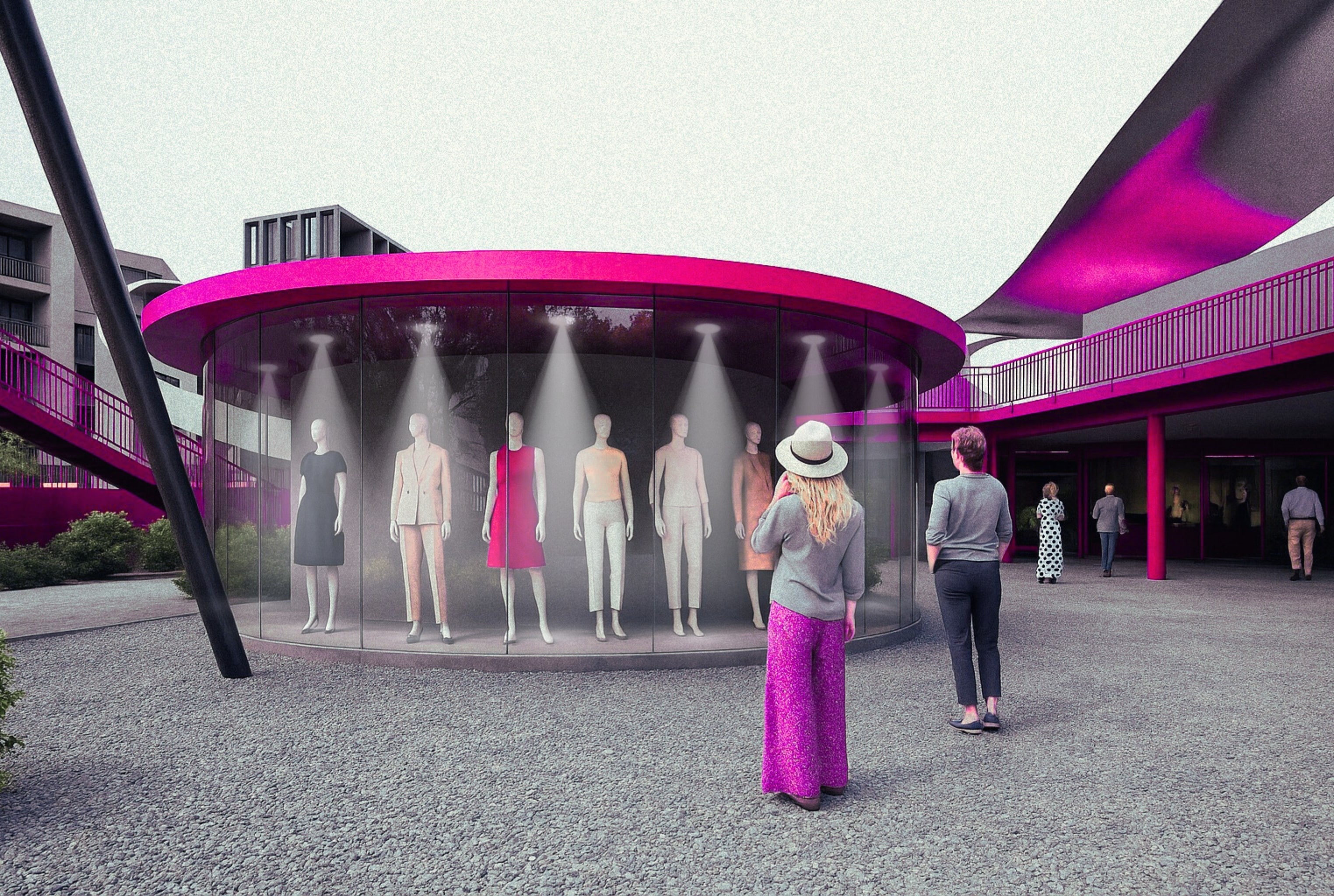
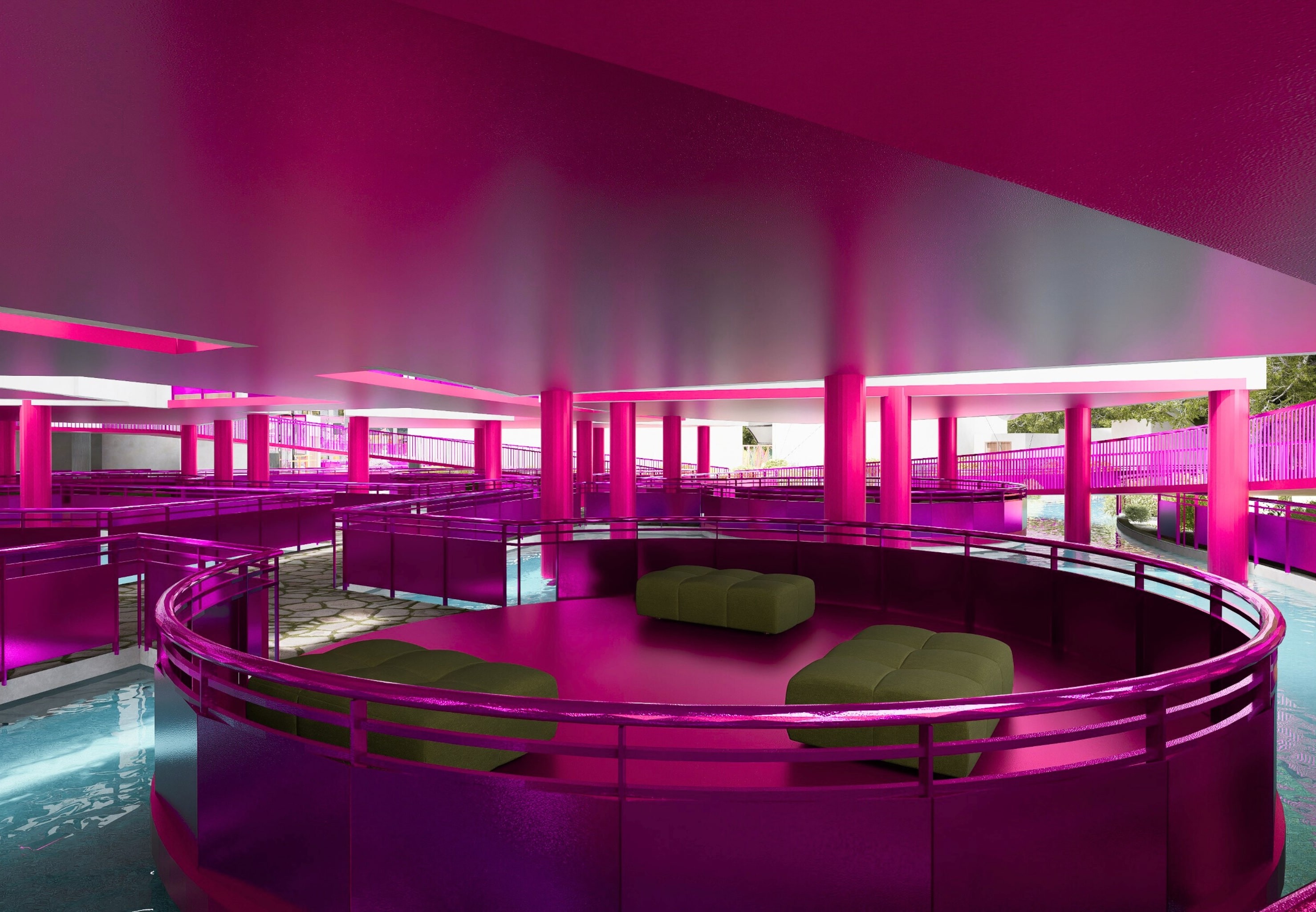
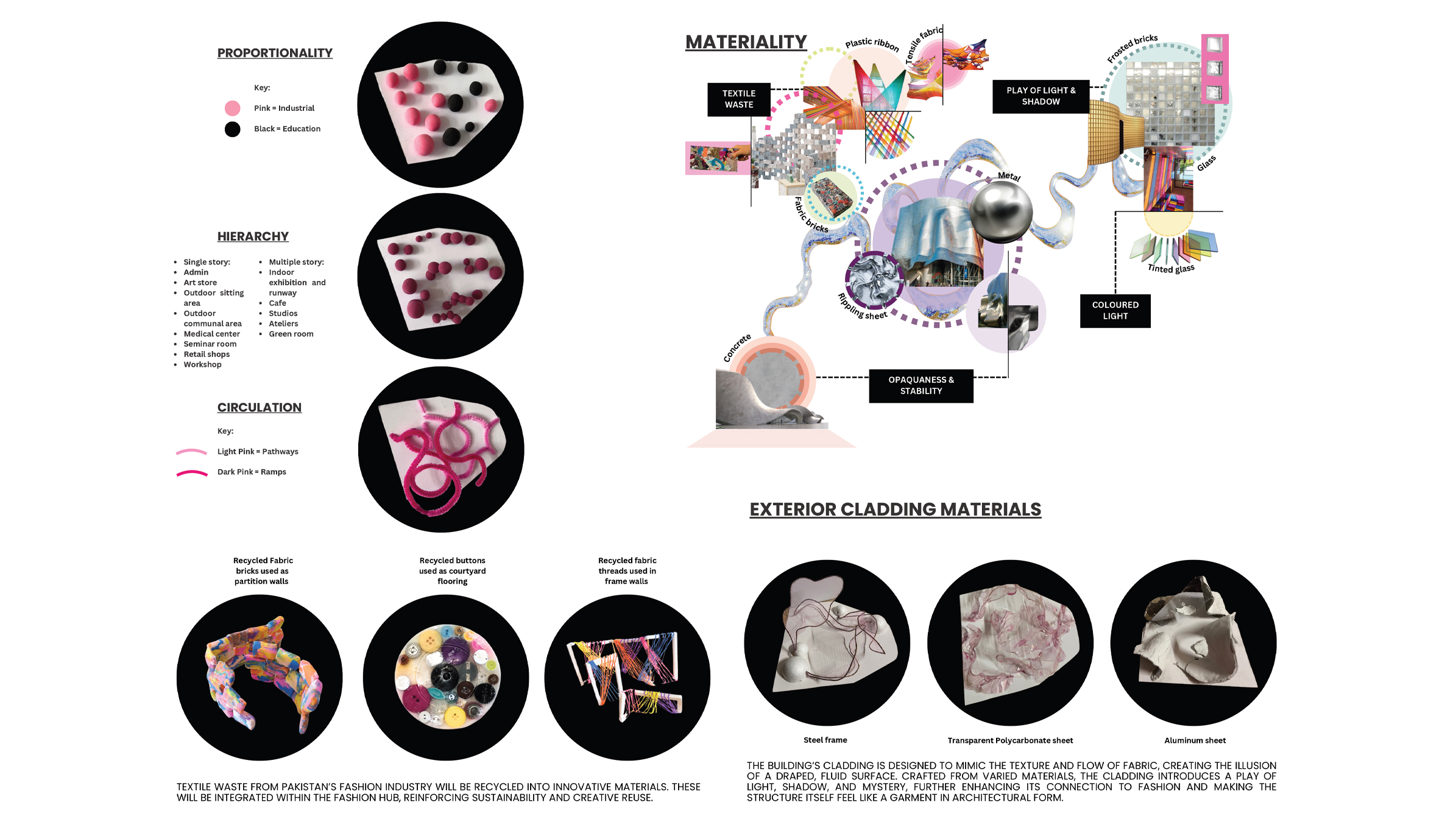
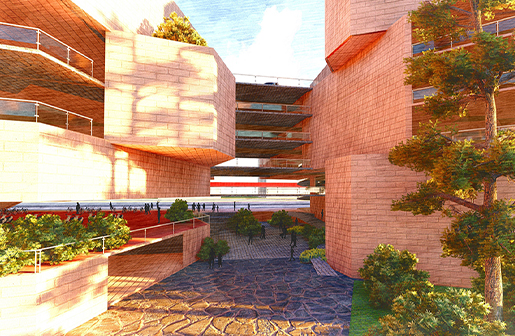
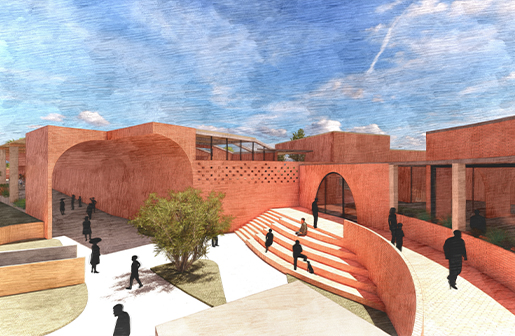
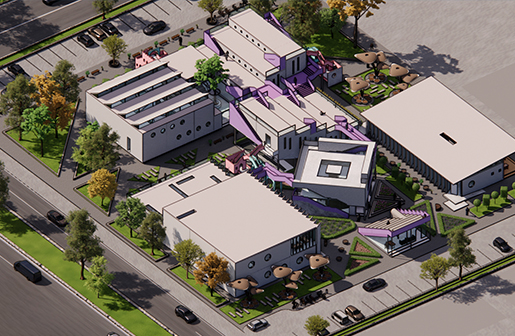
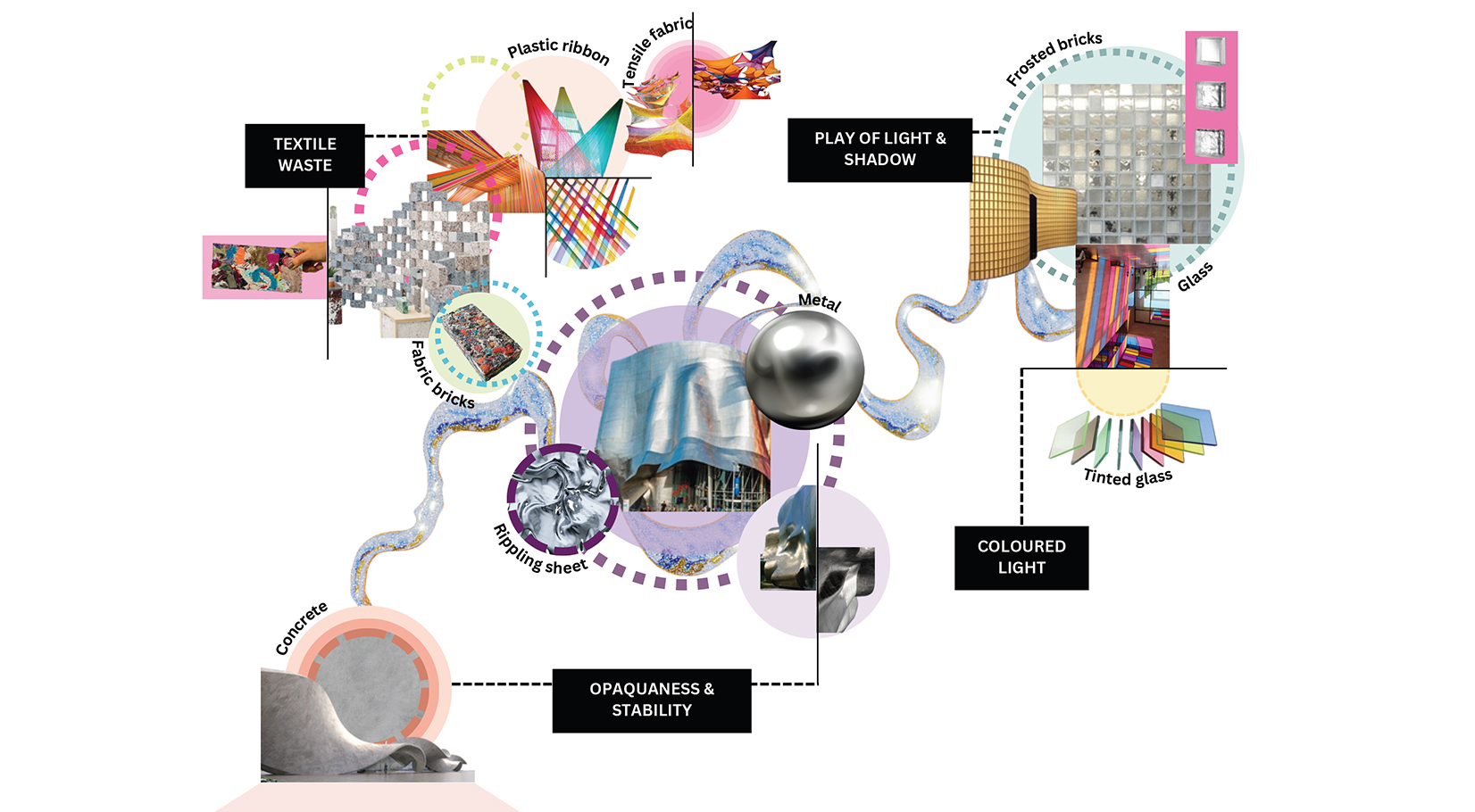
Situated on Doongi Ground, M.M. Alam Road, the program follows a 60:40 ratio of professional to educational spaces, balancing practice with learning. Core zones include runways, studios, workshops, exhibition halls, retail, and social areas, all interwoven by pathways through three courtyards: Drape, Seam, and Couture, each offering distinct degrees of openness and enclosure. This rhythm of covered and uncovered spaces enhances both climate adaptability and user engagement. Material innovation draws from Pakistan’s textile waste industry: recycled fabric bricks, thread-reinforced frames, button flooring, and cloth-infused railings express environmental responsibility while grounding the building in its fashion inspiration. The façade mimics fabric drapery using aluminum, steel, and polycarbonate sheets, producing layered effects of light, shadow, and translucency that make the structure itself resemble a garment. Sustainability is reinforced through water bodies serving as passive cooling and sensory calm, while floating seating pads double as adaptable runway stages, embodying the ethos of flexibility.
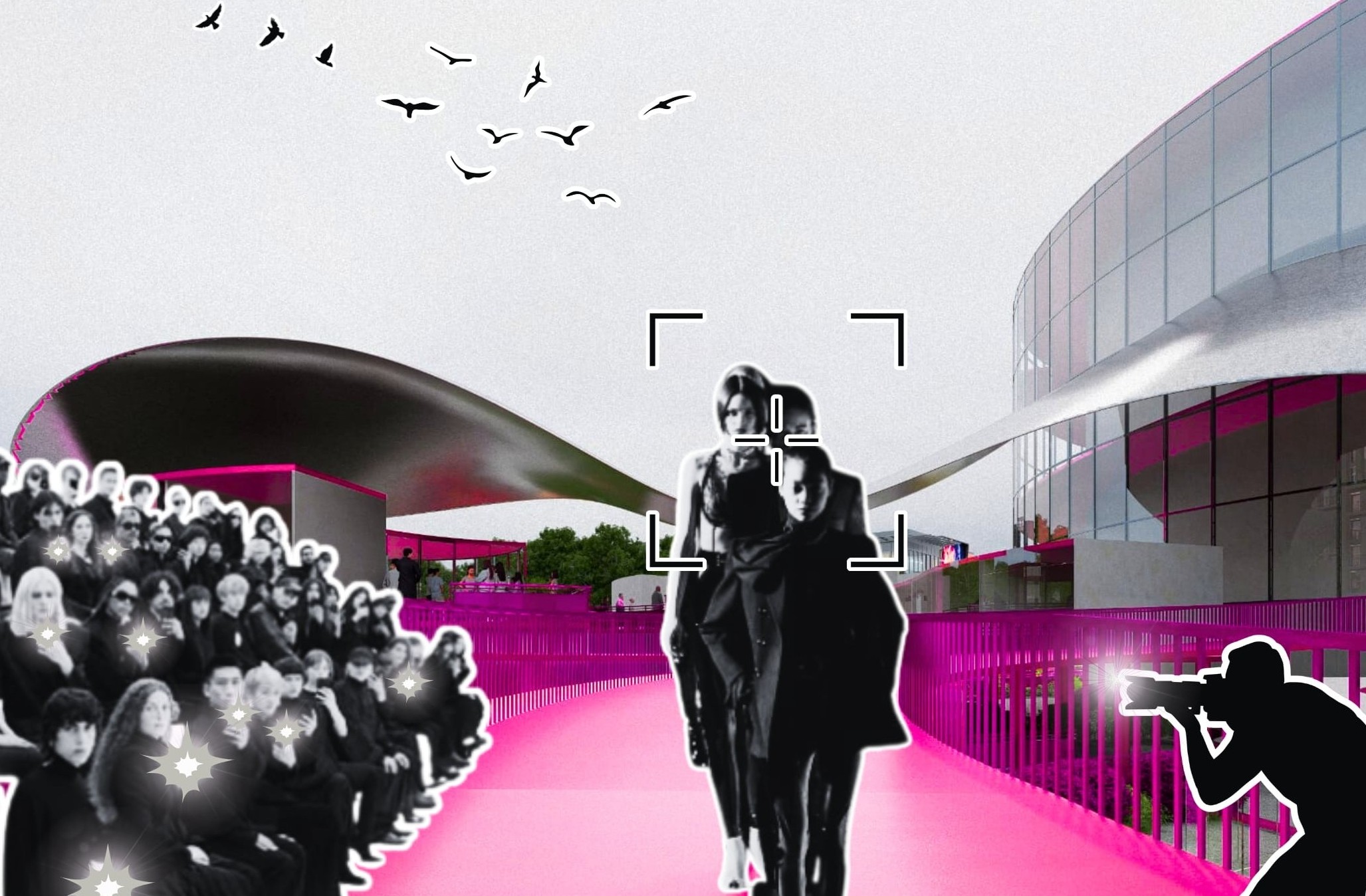
The design process emphasized multi-sensory experiences to make the space more than just functional. Sound, texture, and light were considered at every stage. Movement became choreography, ramps, tiered seating, and pathways ensured users are always immersed in fashion’s dynamic energy. Even the basement transcended conventional use; designed as an infinity loop, it integrates display areas and fashion-themed circulation, turning parking into an experiential journey. Runway to Reverie is not just a building, it is a living ecosystem. A place where students transition into professionals, where designers showcase their legacies, and where architecture itself becomes a runway for ideas.