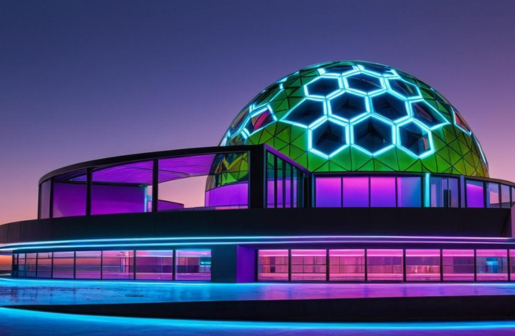
Realm of Flavours and Design
A themed food park that combines elements of thematic architecture, cuisine and interactive communal spaces to create immersive and dynamic dining experiences.
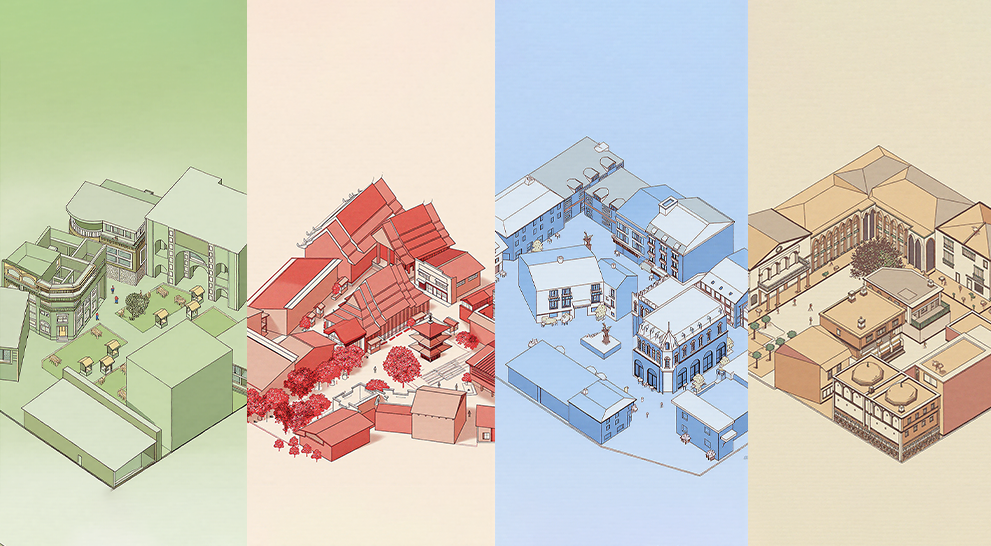
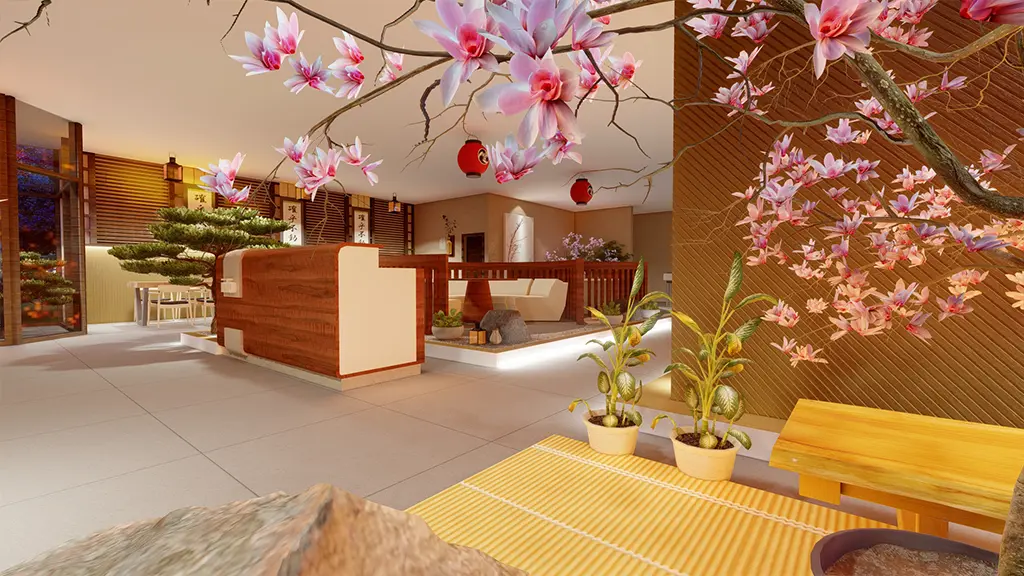
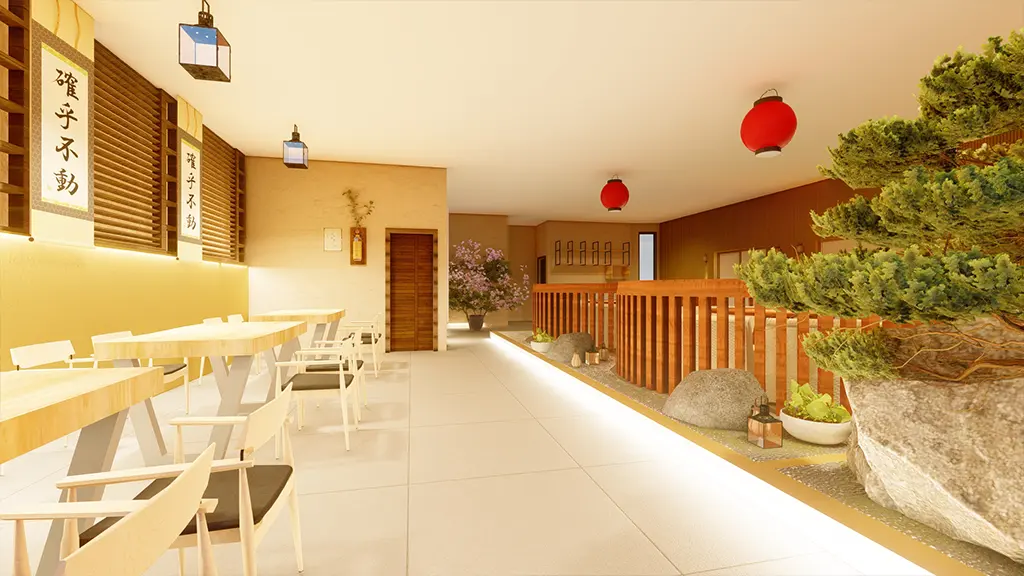
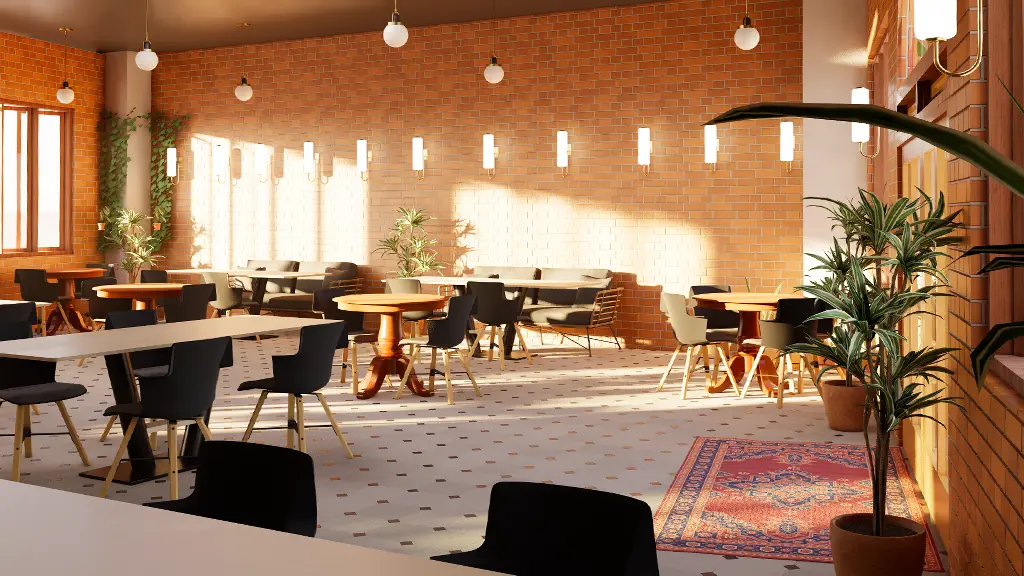
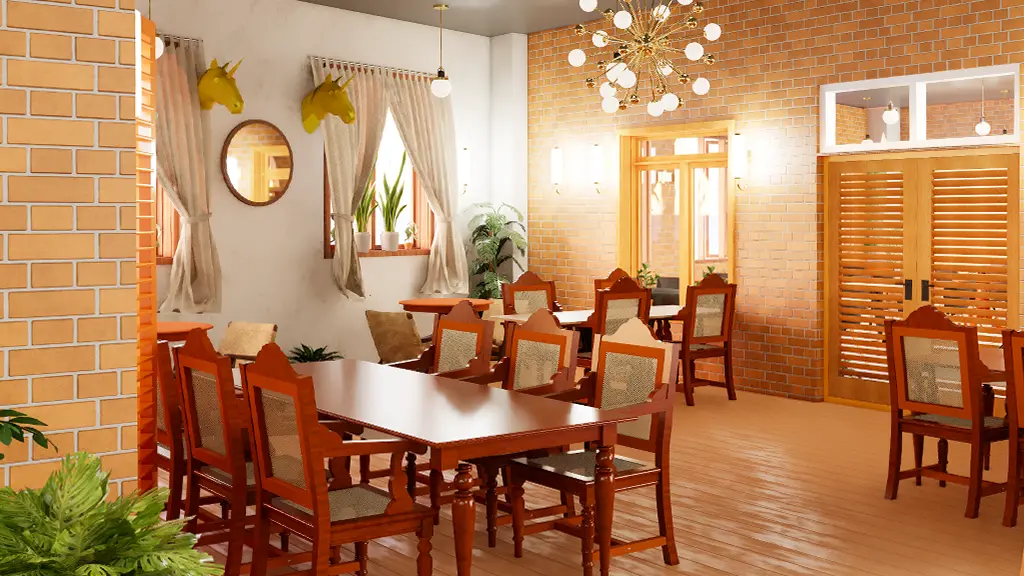
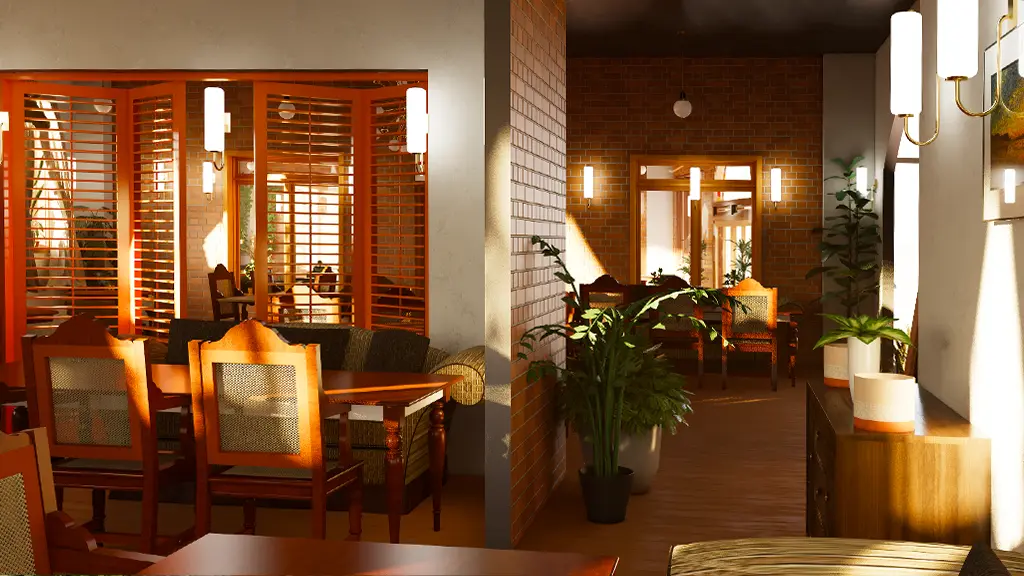
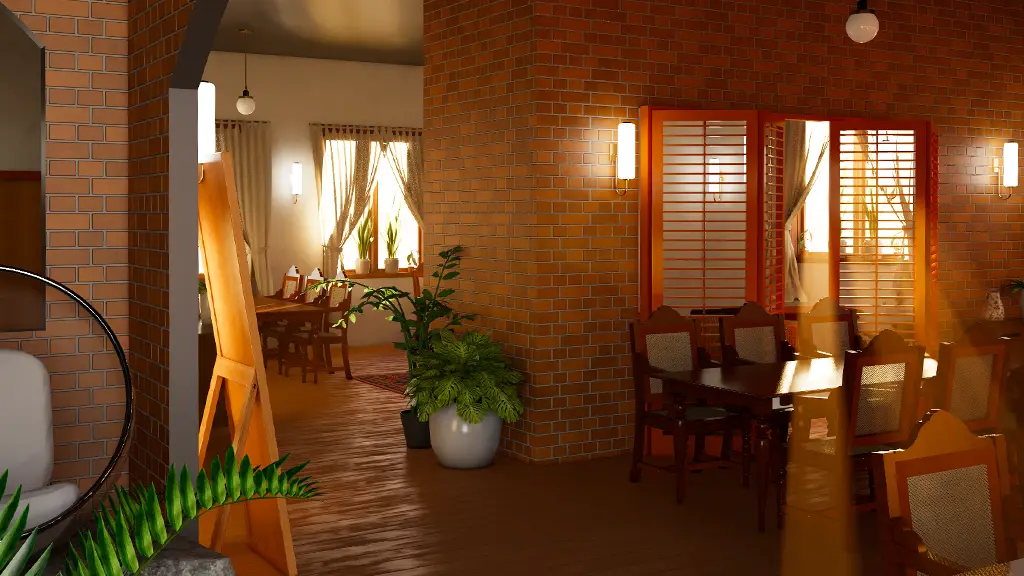
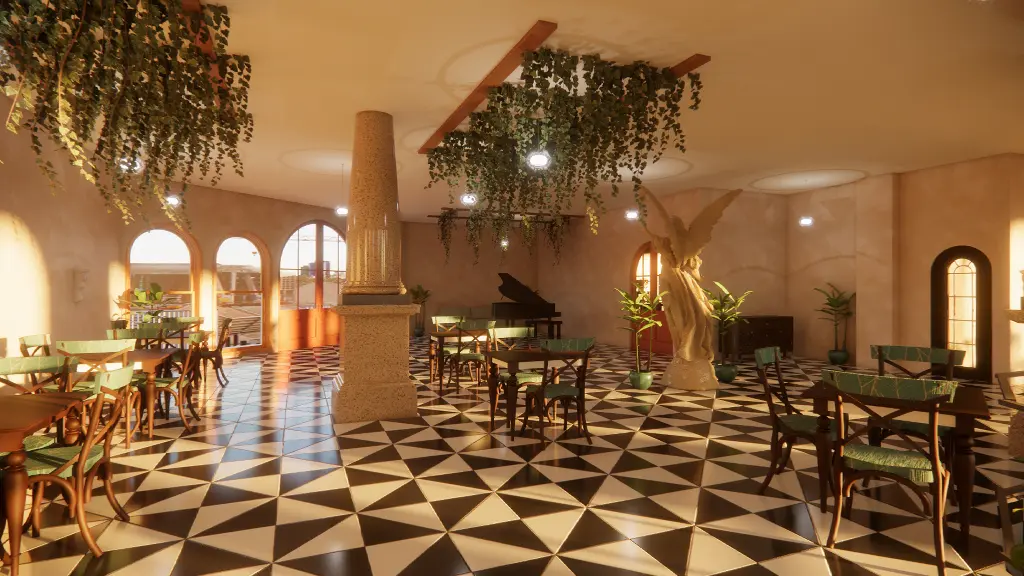
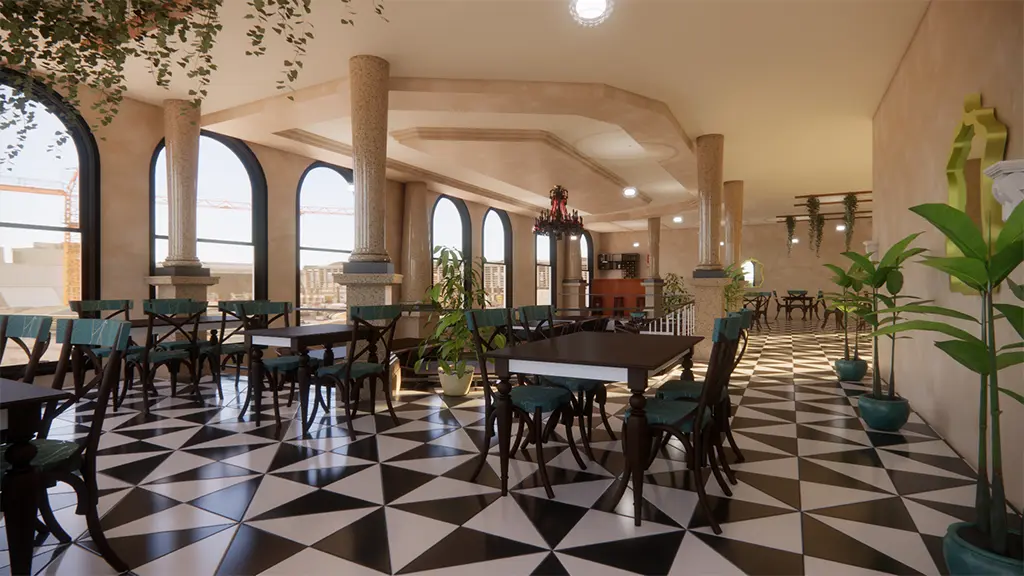
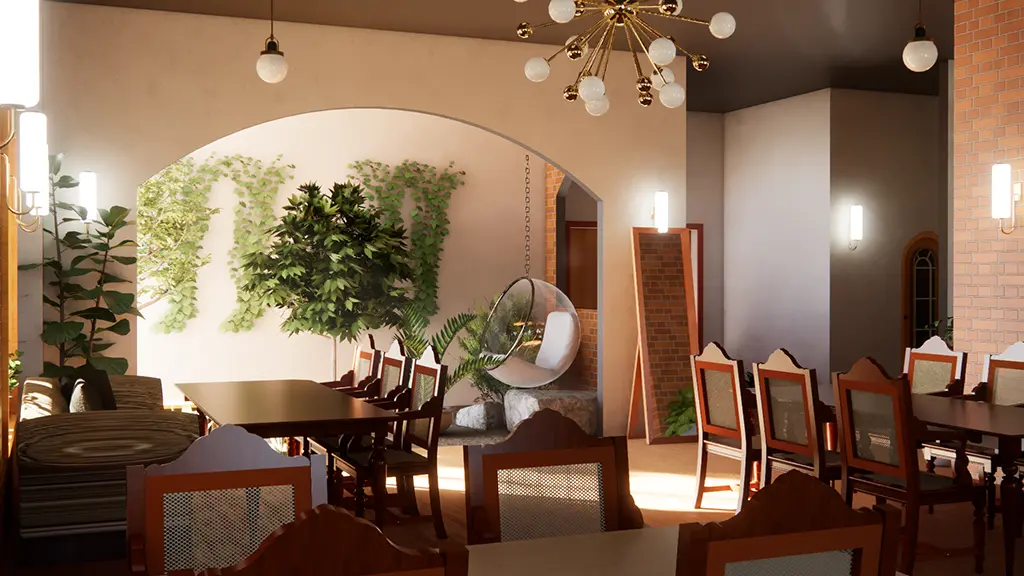
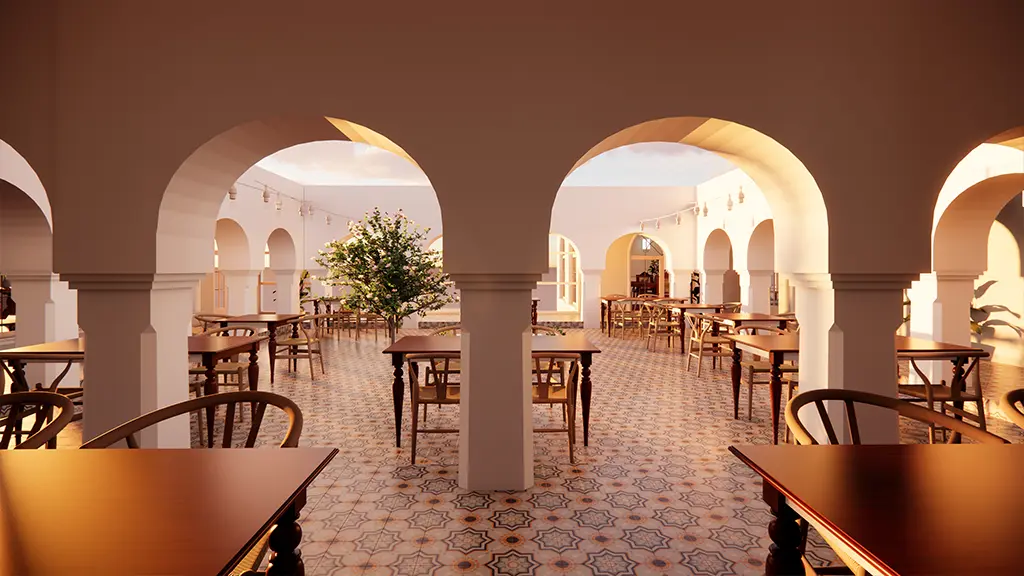
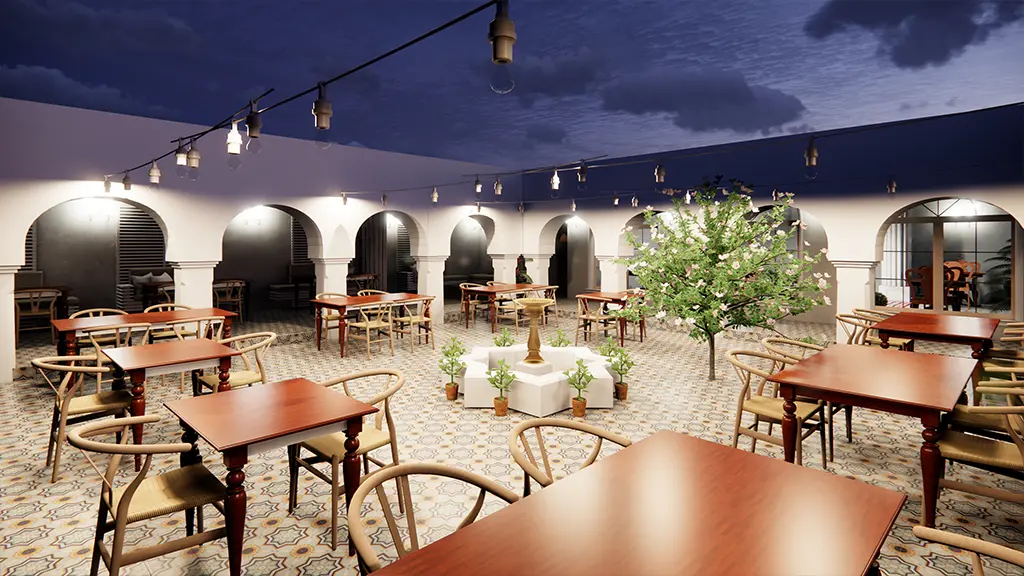
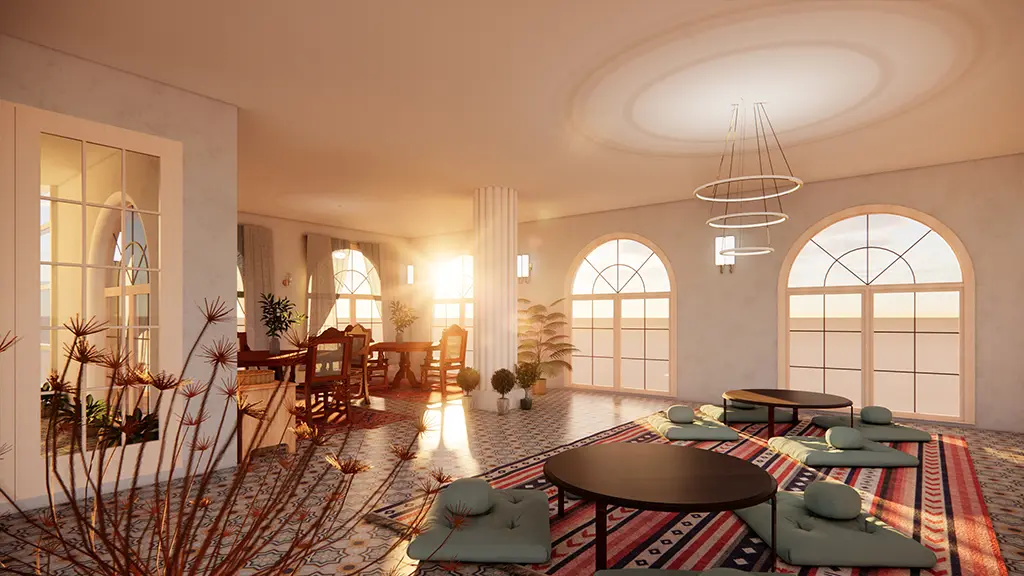
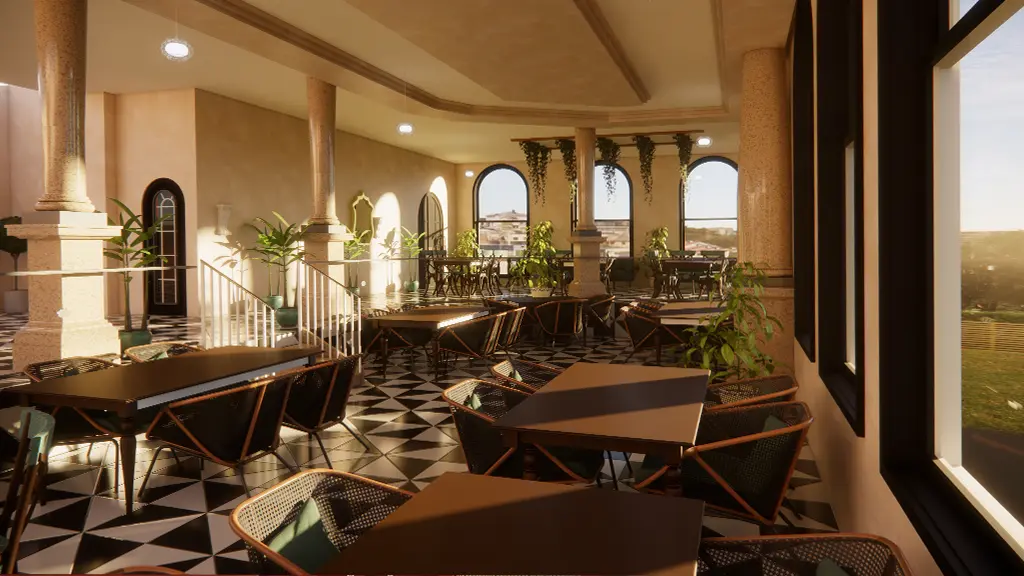
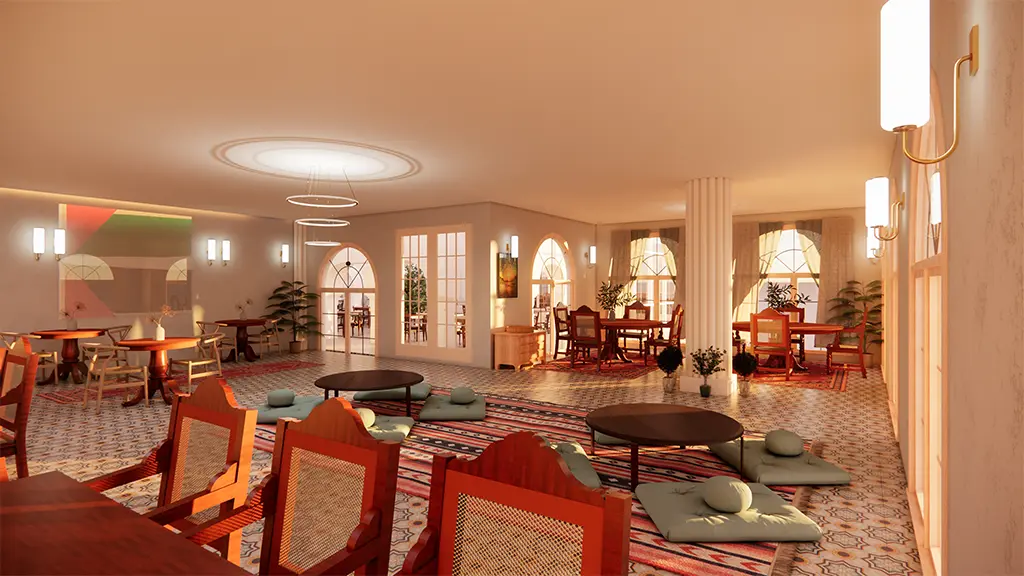
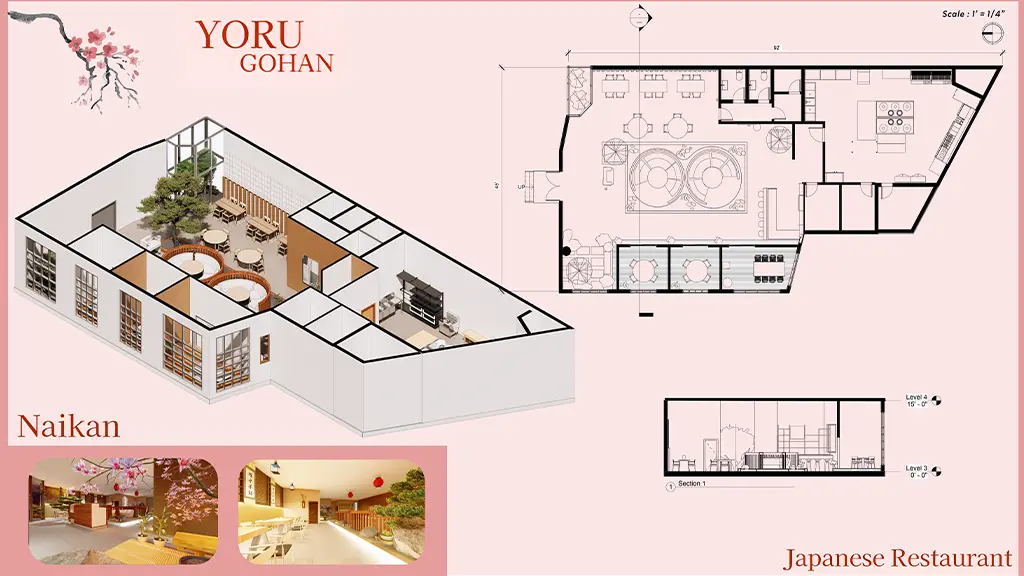
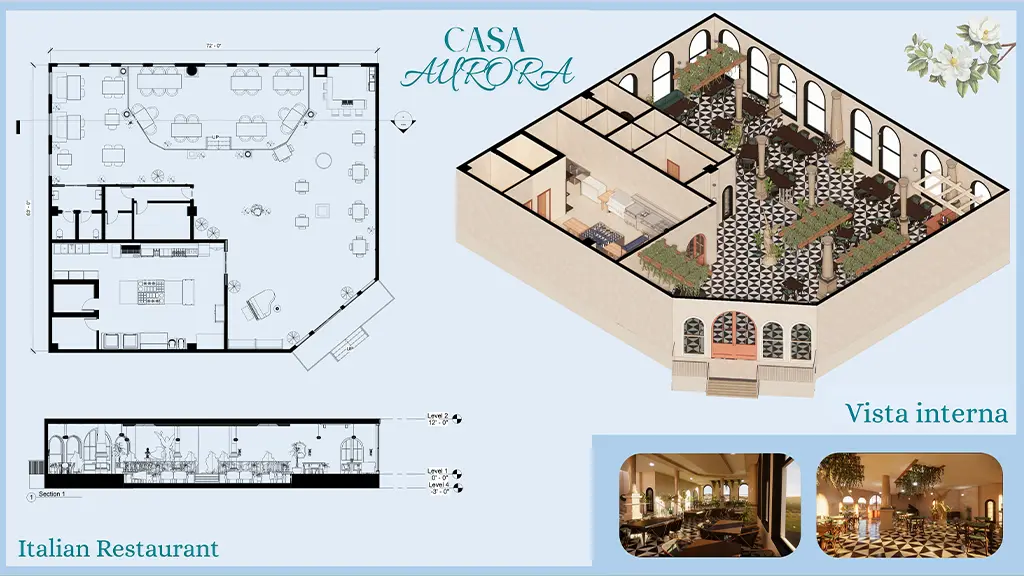
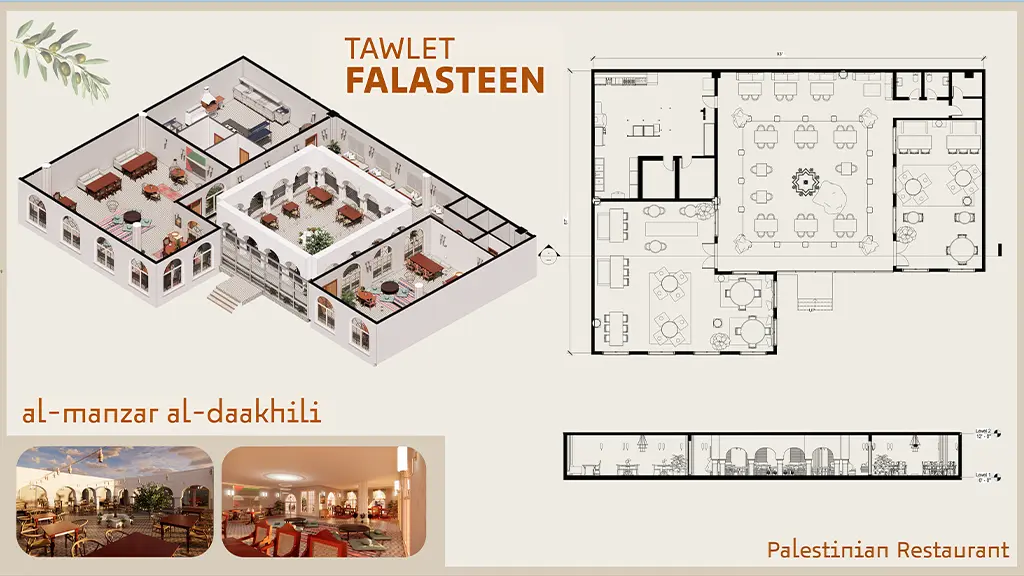
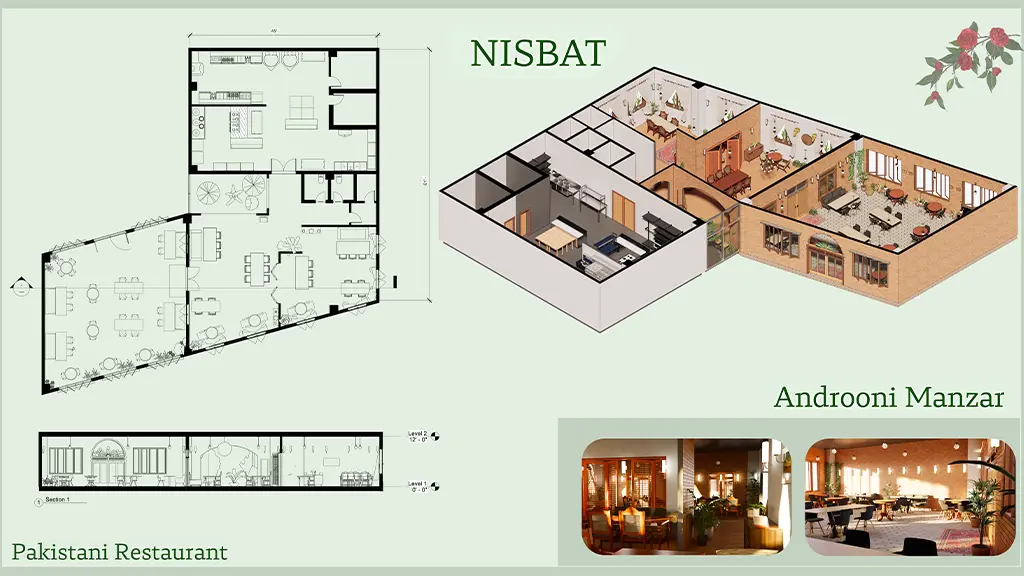
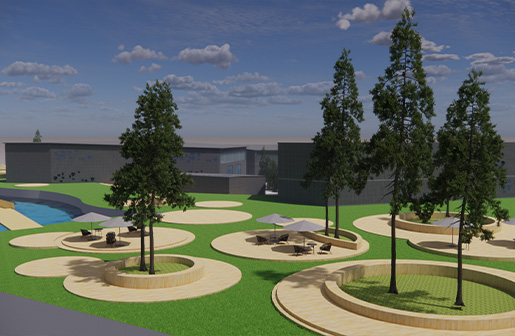
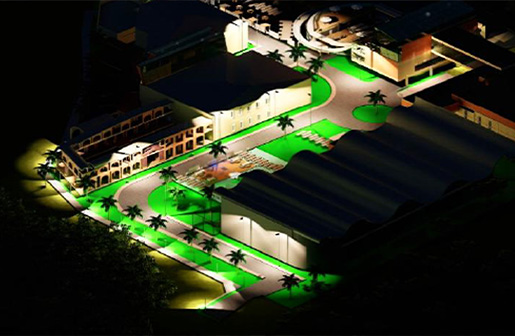
Maryam Zaheer’s undergraduate thesis explores the architectural design of a themed food park that combines elements of thematic architecture, cuisine and interactive communal spaces to create immersive and dynamic dining experiences. Drawing inspiration from global food streets and cultural districts, the project encompasses European, Asian, Middle Eastern & Levantine, and Pakistani/Indian cuisine, each represented through unique architectural spaces. The design spans three dining experiences interior, street food level, mid-range dining, and fine dining. Located in a highly developing area of Lahore, on a signal-free road, the project addresses urban decentralization by creating places and transforming the area into a hub of culinary and cultural activity. Additional programs including cultural festival spaces and culinary school enrich the activities of the area; provide appeals to user groups and engage the public. By connecting these programs, the project aims to establish a vibrant, interactive, and globally attractive destination for food and thematic architecture.
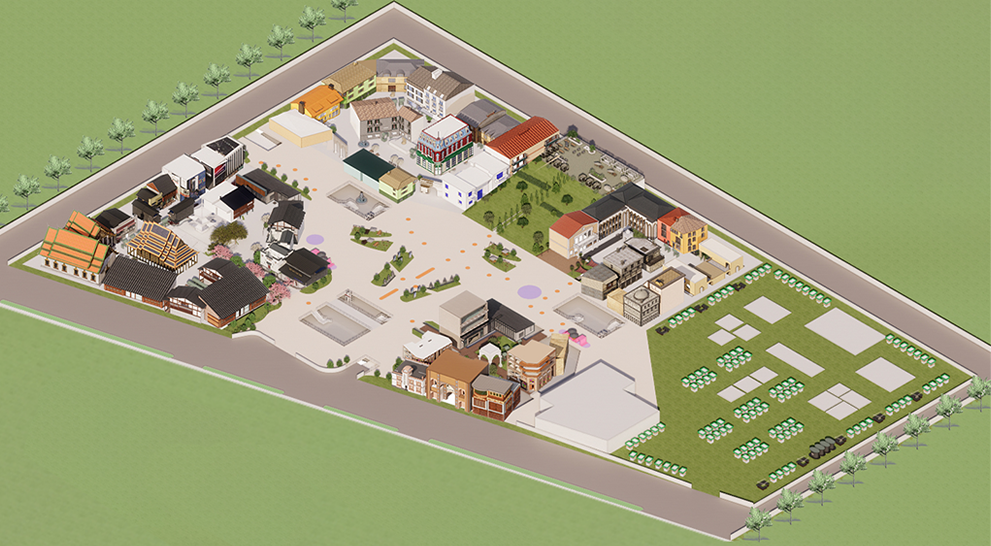
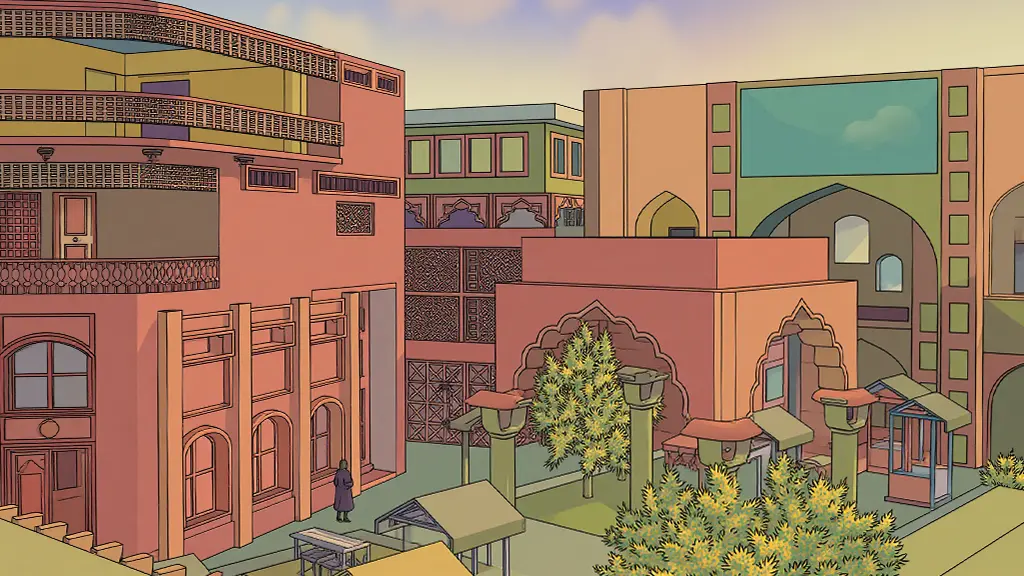
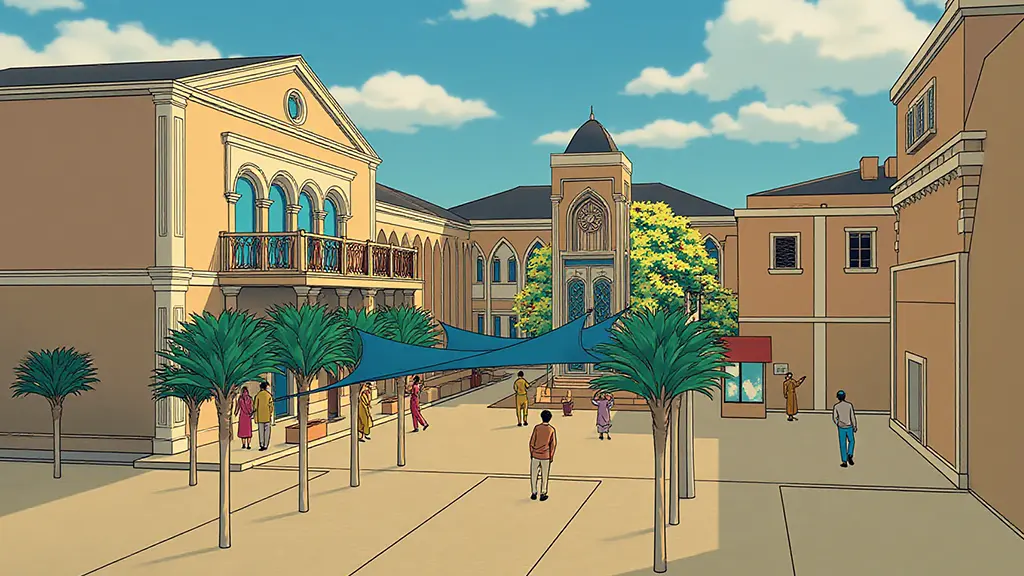
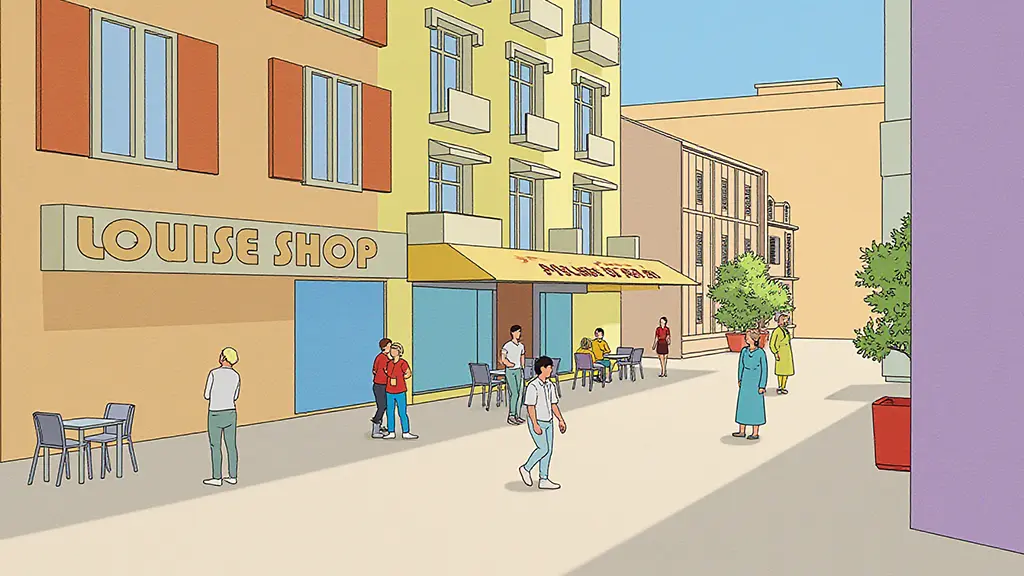
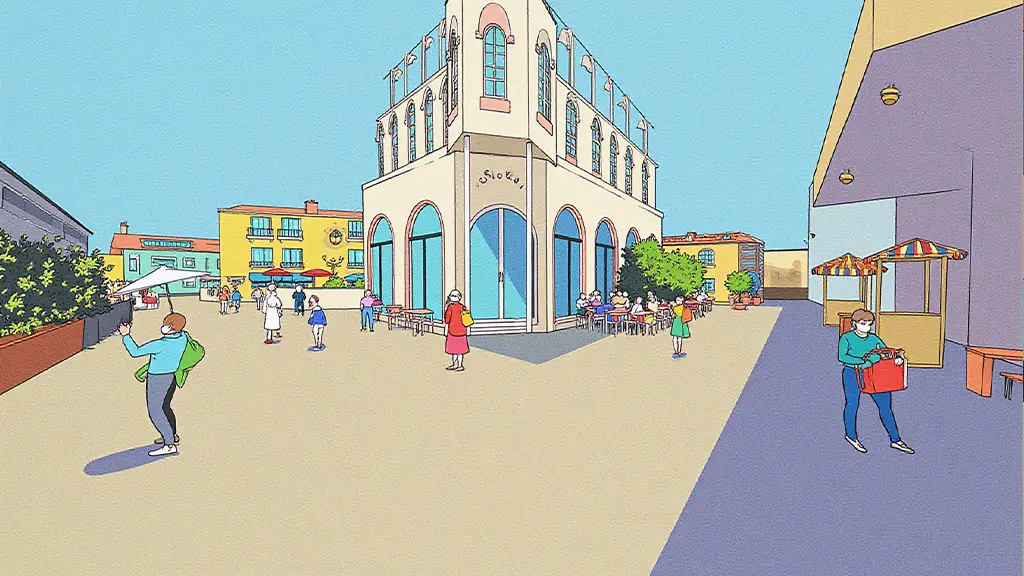
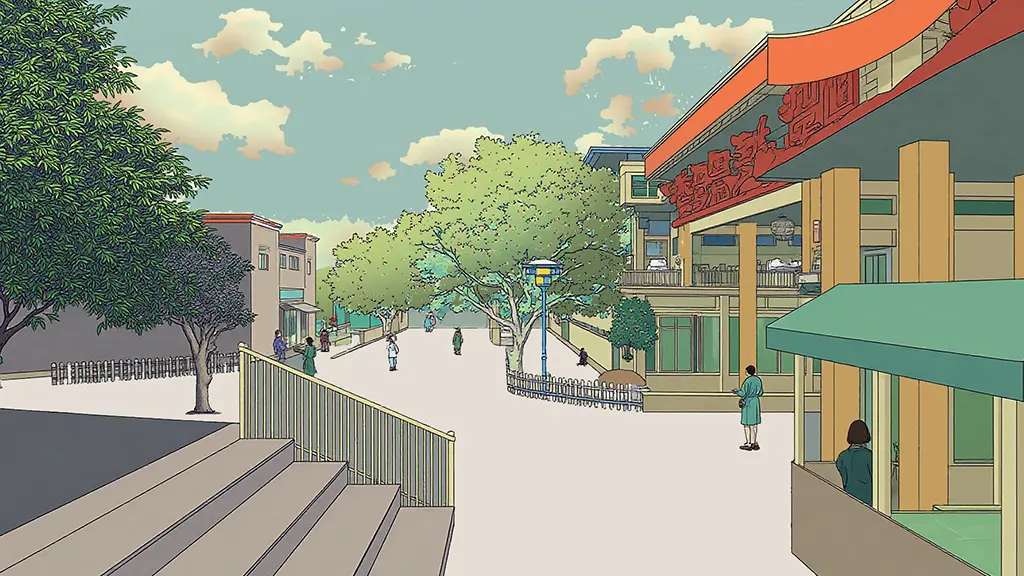
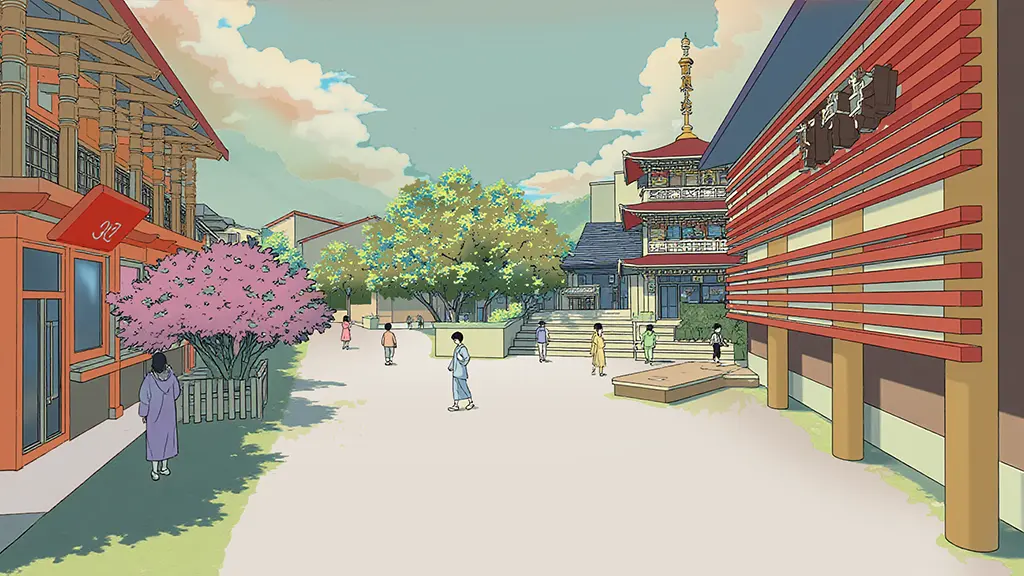
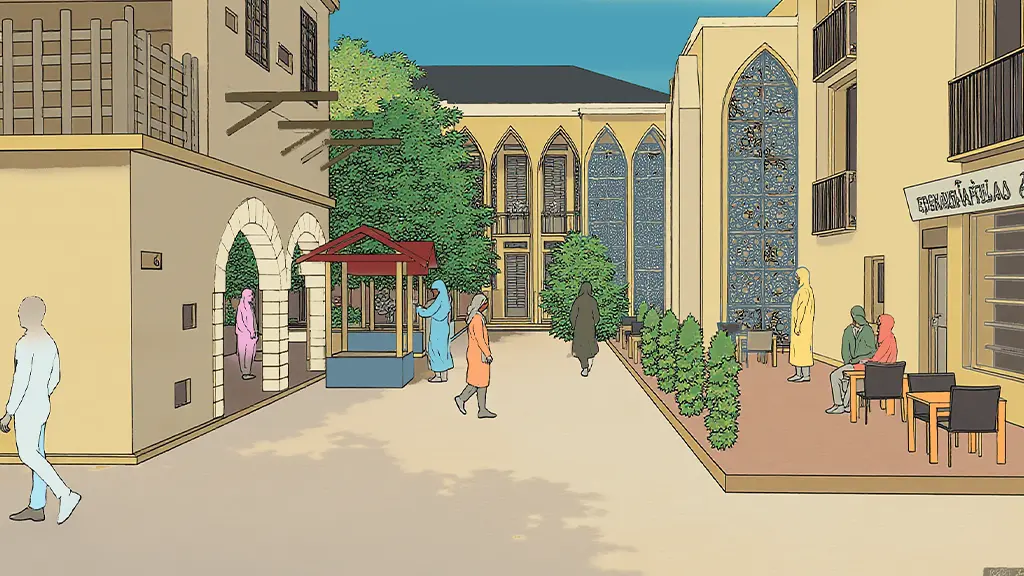
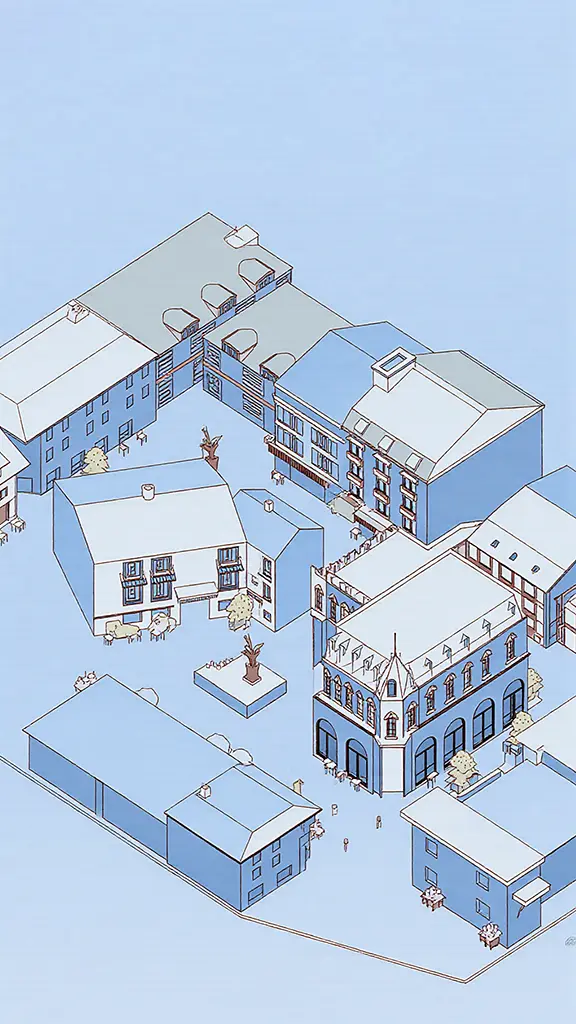
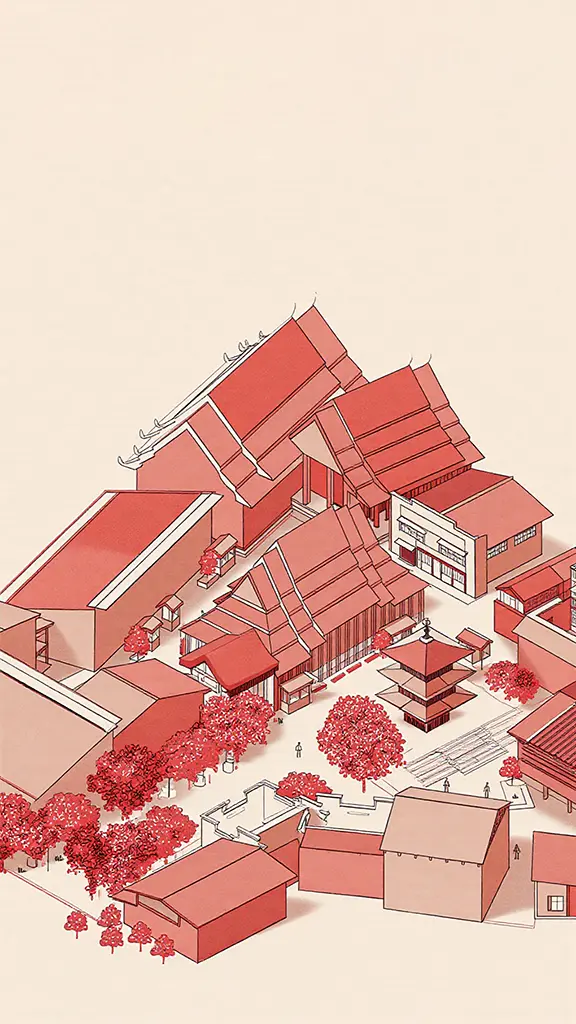
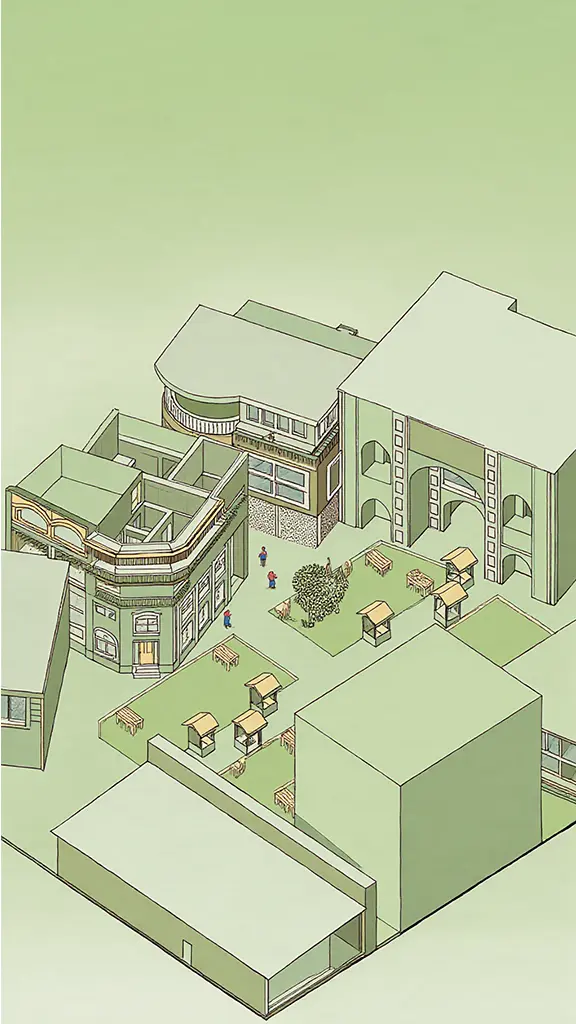
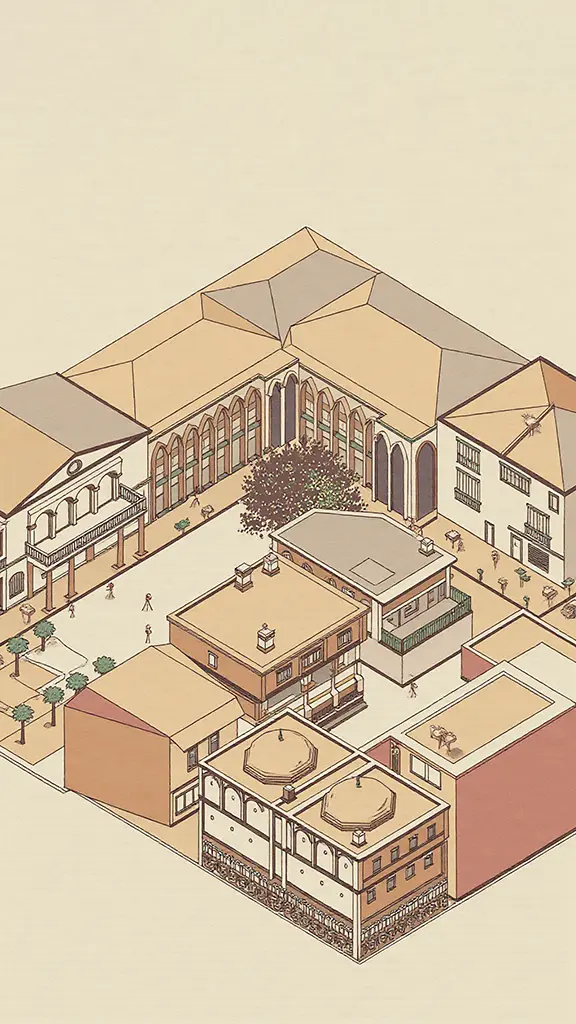
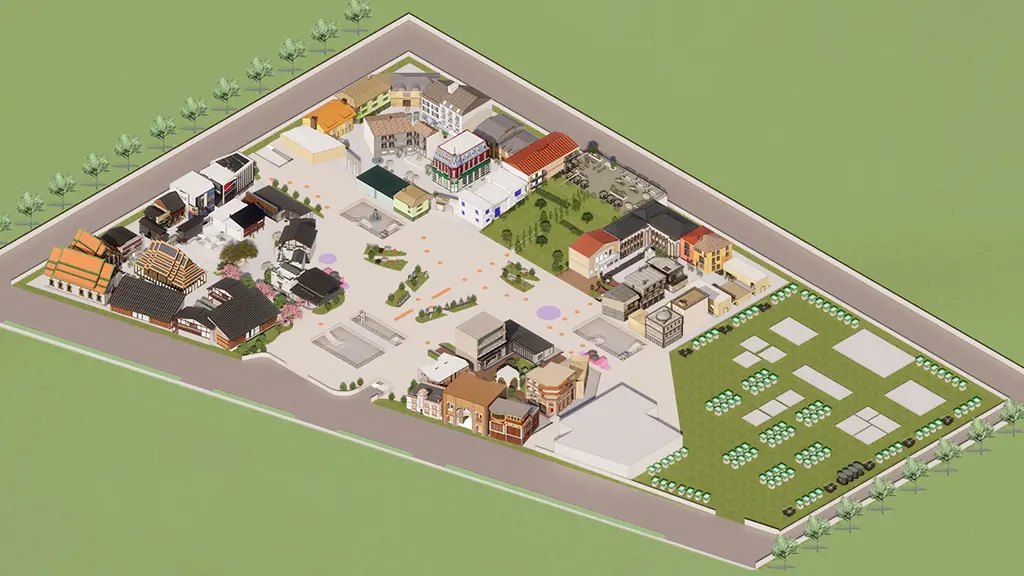
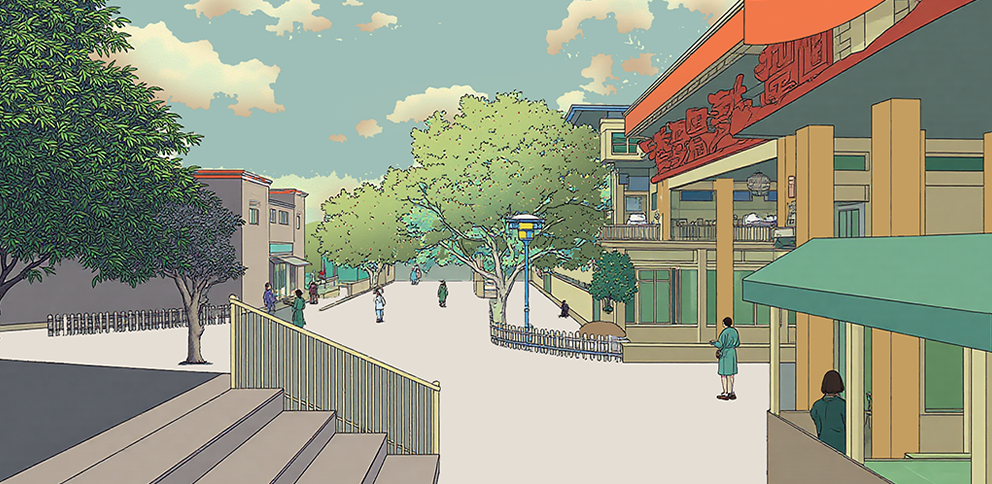
The masterplan transforms a global food street into a cinematic journey, guided by the principles of immersive townscape and theme park logic. The design avoids rigid grids in favour of a continuous, looped circulation path inspired by organic medieval towns like Chester, ensuring no dead ends and a perpetual sense of discovery. A central sunken plaza acts as a vibrant hub, offering visual connections to all zones and serving as a primary focal point. Movement is choreographed for serial vision and kinetic unity. Curved pathways, deflected sightlines, and shifts in elevation gradually reveal spaces, creating anticipation. In the Middle Eastern zone, jaali screens and fragrant spice aromas obscure and entice, while the Asian zone employs dense, neon-lit facades and small surprise courtyards to encapsulate its energetic spirit. Transitions are softly defined; an open pasta counter in the Italian zone blurs the boundary between public street and fine dining, while courtyards and semi-outdoor terraces allow inside spaces to extend outwards.
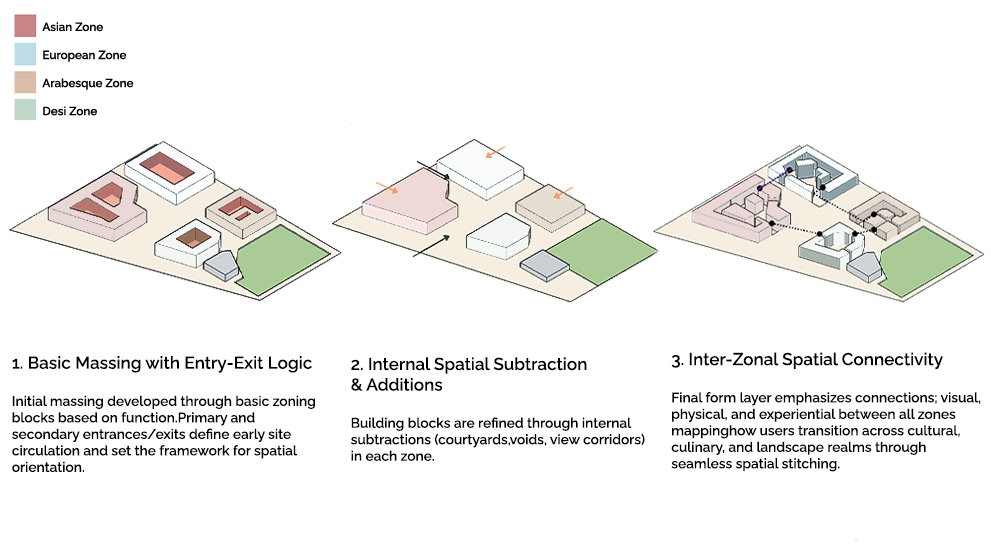
The experience is a rhythmic interplay of narrow, intimate alleys opening into festive plazas, creating punctuation and spatial drama. This "narrows and undulation" controls flow organically, with wider lanes in festival areas naturally narrowing near intimate cafes. Thematic gateways, like a Torii gate for Asia or a grand arch for the Middle East, mark immersive entry sequences using texture, light, and scent to signal a distinct sense of arrival. Versatility is key. Spaces transform for festivals; the South Asian courtyard uses retractable lighting and mobile stalls to become a bustling Masala Food Fest. Throughout, multi-sensory layer, from digital projection mapping narrating legends on Levantine walls to the serene sound of water at a Japanese pause point, enrich a cohesive, story-like experience where every space serves a social and experiential purpose.